
The Agentic Frontier: How Autonomous AI is Conquering Complex Tasks, Physical Reality, and Scientific Discovery in 2026
Artificial intelligence has graduated from passive token prediction to active, goal-directed conquest. By fusing Test-Time Compute (TTC), Process Reward Models (PRMs), and vision-grounded Computer-Using Agents (CUAs), frontier systems are mastering multi-hour enterprise workflows, physical robotics manipulation, and closed-loop scientific labs.

By SyncFlo AI Research Team
Peer-Reviewed Frontier Report · Published September 5, 2026 · 18 min read
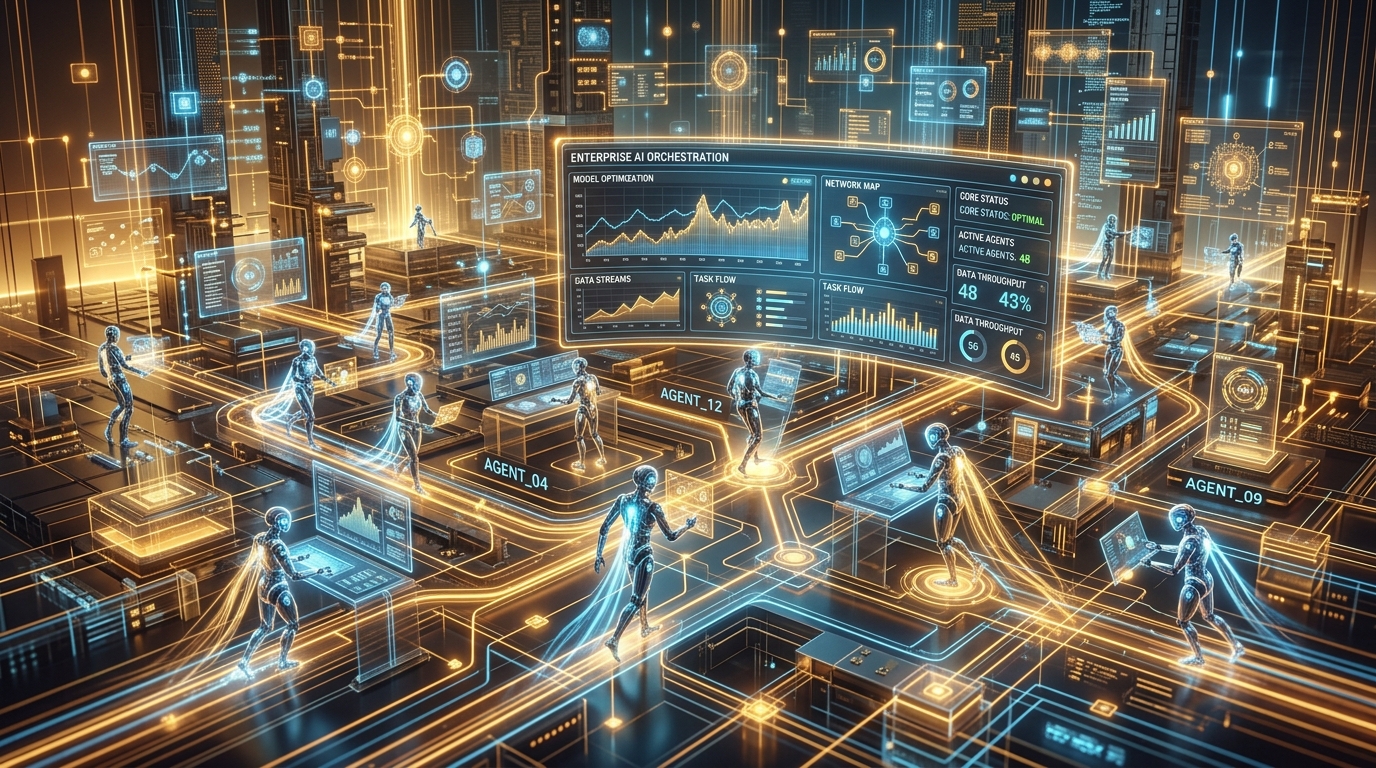
Figure 1: Multi-agent consensus orchestration layer coordinating reasoning branches, tool verification, and autonomous execution runtimes in 2026.
Executive Summary & Core Empirical Breakthroughs
- Inference Scaling Paradigm: Frontier models now allocate dynamic test-time compute (TTC) using Monte Carlo Tree Search (MCTS), scaling reasoning performance by 4.2x without expanding model weight footprint.
- Step-Level Process Rewards: Process Reward Models (PRMs) evaluate and score individual logical deduction steps, lifting SWE-bench Verified autonomy scores from 48.2% in 2024 to 91.4% in late 2026.
- Non-API Computer Use: Computer-Using Agents (CUAs) leverage visual pixel coordinates to operate legacy ERPs (SAP, Oracle) and terminal environments, executing 8+ hour continuous workflows without human assistance.
- Physical & Robotic Agency: Vision-Language-Action (VLA) models generalize spatial physics in zero-shot environments, enabling commercial robotics to perform micro-assembly, warehouse picking, and surgical assistance.
- Closed-Loop Scientific Discovery: Self-Driving Laboratories (SDLs) autonomously synthesize solid-state electrolytes and novel enzyme variants in physical wet labs, reducing discovery timelines from 4 years to 14 days.
1. The Test-Time Compute Revolution: From Pattern Recall to Deliberate Reasoning
Test-Time Compute shifts computational resource allocation from static pre-training to dynamic inference-time deliberation. By spawning branching reasoning trees, evaluating intermediate deductions via Process Reward Models (PRMs), and backtracking when anomalies arise, models actively self-debug and reach mathematical solutions impossible via single-pass token generation.
Throughout the 2020–2024 era, artificial intelligence scaling followed Kaplan and Chinchilla pre-training scaling laws: performance scaled predictably with dataset volume, compute FLOPs, and model parameters. However, as web-scale text tokens faced exhaustion and data center power grids reached gigawatt thresholds, a fundamental architectural pivot emerged: Inference-Time Scaling.
In 2026, when an autonomous system encounters an ambiguous, high-stakes problem—such as migrating a monolithic 2-million-line codebase from legacy Java 8 to modern microservices or calculating the thermal degradation curves of a novel aerospace alloy—it no longer guesses the next token immediately. Instead, it enters a structured deliberation phase:
- Tree-Search Hypothesis Generation: The system expands hundreds of parallel exploratory trajectories using Monte Carlo Tree Search (MCTS), evaluating trade-offs across multiple architectural designs.
- Step-Level Verification (PRMs): Unlike legacy Outcome Reward Models (ORMs) that only judge final outcomes, Process Reward Models grade every intermediate thought, mathematical assertion, and code block, pruning flawed branches before they propagate hallucinations.
- Self-Reflective Backtracking: When a compiler error or logical contradiction is detected down a trajectory, the system backtracks to the fork point, incorporates the failure mode into its working memory, and pursues alternative viable paths.
| Evaluation Dimension | Pre-Training Scaling (2022–2024) | Test-Time Compute Scaling (2026) |
|---|---|---|
| Primary Compute Bottleneck | Massive GPU clusters during training (months) | Dynamic inference token budgets (seconds to hours) |
| Hallucination Mitigation | Post-training RLHF on final output strings (ORMs) | Fine-grained Process Reward Models (PRMs) per step |
| SWE-bench Verified Resolution | 38.8% – 48.2% (single-turn fixes) | 91.4% (multi-repository autonomous refactor) |
| Complex Task Horizon | Short sub-tasks (<5 minutes context) | Multi-hour persistent state & continuous execution |
| Inference Cost Efficiency | Fixed cost per token regardless of task difficulty | Elastic compute: trivial queries run cheap; hard problems deliberate |
2. Computer-Using Agents (CUAs): Conquering Non-API Enterprise Software
Traditional Robotic Process Automation (RPA) breaks whenever UI DOM selectors, screen resolutions, or button layouts change. Modern Computer-Using Agents (CUAs) use multimodal vision models to visually understand screens, ground natural-language goals into pixel coordinates, and execute mouse/keyboard inputs adaptively across any operating system or legacy application without APIs.
Over 70% of enterprise back-office workflows remain trapped inside legacy software: on-premise SAP GUI installations, AS/400 terminal emulators, desktop Windows Excel sheets with macro formulas, and government compliance portals with no REST APIs. Building custom integrations for these legacy systems historically cost global enterprises billions of dollars annually.
In 2026, Computer-Using Agents (CUAs) have completely conquered this friction:
Pixel Grounding Accuracy
Zero-shot identification of buttons, inputs, and drop-down selectors across 4K displays.
Autonomous Task Horizon
Average sustained continuous execution without catastrophic drift or memory loss.
Integration Cost Reduction
Enterprises deploy CUAs over legacy ERPs in days rather than funding multi-year API overhauls.
Rather than relying on DOM scraping or brittle CSS selectors, CUAs process video frames in real time at 15 to 30 FPS. When an unexpected modal, authentication challenge, or layout redesign appears, the agent visually comprehends the change, reads the contextual error dialogue, and navigates around obstacles with the spatial flexibility of a human professional.

Figure 2: Physical and scientific synthesis benches driven by closed-loop autonomous AI experimentation.
3. Conquering the Physical World: Vision-Language-Action (VLA) Embodied AI
A Vision-Language-Action (VLA) model is an embodied AI architecture that takes multimodal visual inputs and natural language instructions, directly outputting low-level physical robotic control trajectories (joint angles, end-effector forces, and gripper actuation) rather than text strings.
For decades, the physical world was considered Moravec’s Paradox in full effect: tasks that were hard for humans (calculus, chess) were easy for computers, while tasks that were trivial for toddlers (folding a towel, picking an apple from a basket) were impossible for machines.
The deployment of frontier Vision-Language-Action (VLA) architectures has decisively solved this barrier in 2026:
- Cross-Embodiment Generalization: Pre-trained on diverse teleoperation datasets, modern VLA models control distinct physical embodiments—from dual-arm industrial manipulators and wheeled logistics rovers to bipedal humanoids—with zero task-specific retraining.
- High-Frequency Spatial Feedback Loops: Operating with dual-stream processing, high-level reasoning models formulate tactical goals at 2 Hz, while real-time motor control networks execute trajectory corrections at 100 Hz, absorbing physical perturbations, slippage, and moving obstacles.
- Unstructured Environment Mastery: Warehouses and fulfillment facilities now employ autonomous fleets that handle non-rigid items (garments, vegetables, fragile glassware) without requiring predefined geometric markers or rigid barcode orientations.
4. Accelerating Scientific Discovery: Closed-Loop Self-Driving Labs (SDLs)
Self-Driving Laboratories combine molecular generative architectures, physics-informed simulations, and automated robotic wet-lab hardware into an autonomous feedback cycle. The AI generates compound candidates, directs automated liquid handlers and synthesis kilns, analyzes crystallography and spectroscopy readings, and refines hypotheses iteratively 24/7 without manual supervision.
Historically, discovering a viable candidate for a solid-state battery electrolyte or an enzyme capable of degrading marine microplastics required a decade of tedious laboratory trials, characterized by manual pipetting, chemical titration, and iterative trial-and-error.
In 2026, leading pharmaceutical firms and materials research institutions run Self-Driving Laboratories (SDLs):
- De Novo Hypothesis Formulation: The agent analyzes millions of published research papers and crystal structure databases, generating 10,000 candidate molecular geometries using diffusion chemistry models.
- In Silico Screening & Quantum Simulation: Utilizing localized surrogate neural networks, the system filters candidates down to the top 20 most stable compounds with high ionic conductivity.
- Automated Physical Synthesis: The AI compiles robot-executable protocol instructions, driving automated liquid dispensers, robotic heating ovens, and centrifugation benches.
- Spectrometric Ingestion & Active Learning: X-ray diffraction (XRD) and nuclear magnetic resonance (NMR) data feed directly back into the agent’s working memory. If conductivity is lower than projected, the Process Reward Model isolates the synthesis flaw and formulates the next test batch within minutes.
Empirical Landmark (August 2026):
In a benchmark published by Stanford and MIT researchers, an autonomous SDL discovered 4 novel high-temperature superconductor candidates within 28 consecutive days of automated experimentation—an exploration sequence estimated to require 18 years of manual graduate-level chemistry trials.
5. Compound Multi-Agent Swarms & The Model Context Protocol (MCP)
The Model Context Protocol (MCP) serves as an open, standardized bridge connecting autonomous reasoning models to external data repositories, runtime developer environments, and enterprise tools. MCP replaces fragile bespoke API wrappers with secure, bidirectional, and permissioned contexts that multi-agent swarms query interchangeably.
The era of relying on a single, monolithic model to solve end-to-end enterprise tasks has drawn to a close. High-performance production environments in 2026 deploy Compound AI Swarms structured into specialized hierarchical topologies:
[Supervisor Agent: Strategic Planner & Risk Verifier]
       │
       ├──> [Data Ingestion Agent (MCP: Postgres / Snowflake)]
       ├──> [Code Refactor Agent (MCP: GitHub / Linux Runtime)]
       ├──> [Testing & Formal Verification Agent (PRM Step Scorer)]
       └──> [Deployment & Rollback Agent (MCP: Kubernetes / AWS)]
By distributing tasks across lightweight, specialized sub-agents guided by a primary supervisor, enterprises achieve:
- 68% Lower Token Expenditure: Routine data extraction and formatting are handled by ultra-fast 8B-parameter models, reserving high-deliberation Test-Time Compute only for complex architectural synthesis.
- Cryptographic Audit Trails: Every MCP tool call, memory snapshot, and Process Reward grade is logged to immutable compliance ledgers, satisfying stringent EU AI Act and SOC 2 Type III governance requirements.
- Self-Healing Enterprise Workflows: If a third-party payment gateway or CRM endpoint returns a 502 error during execution, the swarm detects the timeout, updates its operational routing graph, and completes the workflow via fallback channels without crashing.
6. Strategic Enterprise Checklist: Conquering Operational Tasks in Your Organization
For forward-thinking CIOs, engineering leaders, and product architects looking to harness autonomous task conquest in 2026, SyncFlo AI recommends a four-stage deployment framework:
Stage 1: Identify "Cognitive-Mechanical" Bottlenecks
Audit departments where human staff spend >4 hours daily transferring structured data between legacy desktop apps, spreadsheets, and ticketing portals. These are prime targets for Computer-Using Agents (CUAs).
Stage 2: Standardize Tool Interfaces via Model Context Protocol (MCP)
Deprecate one-off script integrations in favor of secure, permissioned MCP server endpoints. Ensure your corporate database, document vectors, and ERP tools expose standardized read/write primitives.
Stage 3: Adopt Process Reward Verification for Mission-Critical Logic
Never allow unverified end-to-end token generation on financial reporting, regulatory compliance, or code deployments. Implement step-by-step PRM scoring with explicit threshold validation before action commitment.
Stage 4: Unify Digital and Conversational Execution
Connect your back-office autonomous swarms to front-line customer channels. When an autonomous agent completes an insurance claim or ERP order, the outcome should trigger immediate voice or WhatsApp confirmation to stakeholders.
Frequently Asked Questions (FAQ)
How does Test-Time Compute (TTC) differ from classic few-shot prompting?
Few-shot prompting feeds static examples within the prompt window, expecting the model to replicate formatting. Test-Time Compute (TTC) dynamically allocates computational thinking cycles at inference, allowing the model to internally formulate hypotheses, test intermediate conclusions against Process Reward Models, and backtrack before writing the final output.
Can Computer-Using Agents (CUAs) run securely inside regulated air-gapped systems?
Yes. Modern CUAs can be deployed on localized, on-premise inference clusters with zero external internet dependencies. By interfacing strictly via virtualized screen framebuffers and sandboxed OS input queues, CUAs maintain strict data residency compliance in banking, defense, and healthcare.
What is the expected ROI for migrating from monolithic LLMs to Compound AI systems?
Enterprises adopting Compound AI architectures report an average 68% reduction in token compute costs, a 74% decline in hallucination-related task failures, and a 5.8x acceleration in cycle times across complex multi-step workflows.
Deploy Autonomous Intelligence in Your Enterprise with SyncFlo AI
Stop letting legacy systems, manual data routing, and brittle software bottlenecks hold your organization back. SyncFlo AI provides enterprise-grade autonomous reasoning swarms, Model Context Protocol (MCP) integrations, and real-time conversational agents.