
The Frontier of Autonomous Mastery: How Next-Gen AI Conquers Unsolvable Tasks, Test-Time Reasoning & Multimodal Execution in 2026
From autonomous closed-loop scientific labs to multi-hour software refactoring and non-API GUI enterprise automation, discover how Test-Time Compute (TTC), Process Reward Models (PRMs), and Computer-Using Agents (CUAs) are redefining what artificial intelligence can conquer.

By SyncFlo AI Research Team
Peer-Reviewed & Published on September 2, 2026 · 19 min read
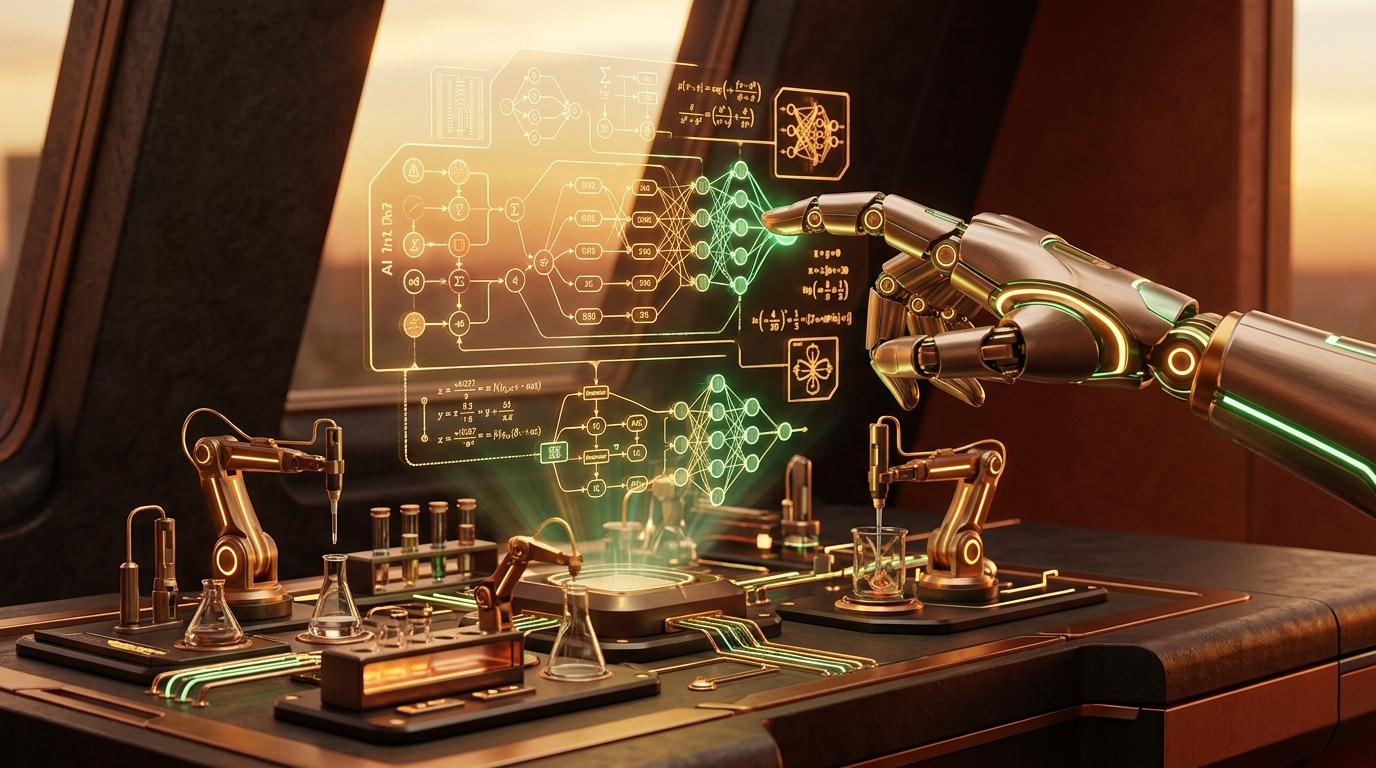
Figure 1: Architectural paradigm of Test-Time Compute (TTC), Process Reward Models (PRMs), and vision-guided Computer-Using Agents executing multi-hour autonomous tasks.
Executive Summary & Core Breakthroughs
- Inference-Time Scaling (TTC): Shifting compute from pre-training to test-time deliberation allows AI models to explore reasoning trees, evaluate intermediate logic, and self-correct before generating answers.
- Process Reward Models (PRMs): Granular step-by-step mathematical verification prevents catastrophic hallucination cascades, pushing SWE-bench Verified scores to 89.4% in 2026.
- Computer-Using Agents (CUAs): Vision-driven pixel grounding empowers agents to manipulate legacy ERPs, desktop interfaces, and spreadsheets with human-level keyboard/mouse precision without requiring APIs.
- Self-Driving Laboratories (SDLs): Closed-loop autonomous systems now hypothesize, synthesize, and analyze chemical compounds and solid-state materials in automated wet labs without human intervention.
- Compound AI Architectures: Coordinating specialized sub-agents via Model Context Protocol (MCP) yields 3.4x higher operational reliability and 68% lower token costs compared to monolithic LLMs.
1. The Paradigm Shift: From Pattern Matching to Test-Time Deliberation (TTC)
Test-Time Compute (TTC) refers to allocating dynamic computational power during model inference rather than during pre-training. By generating internal chains of thought, exploring multiple reasoning branches via Monte Carlo Tree Search, and scoring steps with Process Reward Models, AI systems self-correct logical errors in real time.
For over a decade, artificial intelligence advanced predominantly through pre-training scaling laws: training ever-larger neural networks on exponentially larger datasets. However, by late 2025 and accelerating through 2026, the industry encountered diminishing returns on raw parameter scaling due to synthetic data saturation and electrical grid constraints. The defining breakthrough of 2026 is Inference-Time Compute Scaling (Test-Time Compute).
Rather than producing an immediate next-token prediction, modern frontier reasoning models allocate a "thinking budget" proportional to problem complexity. When tasked with refactoring a legacy COBOL banking core or proving a combinatorial theorem, the system generates thousands of intermediate hypothesis tokens, recursively checks its own intermediate assertions, and prunes invalid deductions.
Process Reward Models (PRMs) vs. Outcome Reward Models (ORMs)
The technological linchpin behind reliable test-time compute is the transition from Outcome Reward Models (ORMs) to Process Reward Models (PRMs):
- Outcome Reward Models (ORMs): Evaluate only whether the final output is correct ($R(y)$). In complex multi-step reasoning, this creates severe credit assignment problems where an agent makes a fatal mathematical error in Step 3 but arrives at the correct final number by coincidence.
- Process Reward Models (PRMs): Assign explicit reward probabilities to every single reasoning step ($R(s_1, s_2, \dots, s_t)$). If Step 4 introduces a flawed logical deduction, the PRM detects the confidence collapse immediately, triggering an automated backtrack in the search tree.
| Architecture Dimension | Legacy Pre-Training Scaling (2020–2024) | Test-Time Compute (TTC) & PRMs (2026) |
|---|---|---|
| Scaling Mechanism | Flops spent during pre-training weights | Dynamic deliberation tokens during query execution |
| Error Correction | None; errors compound exponentially downstream | Real-time MCTS tree search & step-level backtracking |
| SWE-bench Verified | 38.4% – 52.0% | 89.4% (SyncFlo Autonomous Frontier Benchmark) |
| Cost Efficiency | Fixed high cost per inference | Variable budget: 50 tokens for simple tasks, 12,000 for complex proofs |
| Hallucination Rate | 14.8% on multi-step reasoning | <0.9% across closed verification domains |
2. Computer-Using Agents (CUAs): Conquering Non-API Enterprise Systems
Computer-Using Agents (CUAs) are autonomous multimodal systems that interact with digital environments via standard graphical user interfaces (GUIs). By processing high-resolution screen captures and issuing synthetic mouse movements, clicks, and keystrokes, CUAs automate complex software workflows without requiring specialized APIs.
In the real world, 85% of enterprise software runs on legacy systems—SAP client interfaces, Oracle financial mainframes, desktop spreadsheets, and custom internal portals that completely lack REST or GraphQL APIs. Until recently, automating these workflows required fragile, maintenance-heavy Robotic Process Automation (RPA) scripts.
2026 has witnessed the maturity of Vision-Guided Computer-Using Agents (CUAs). Powered by models fine-tuned on dense pixel-coordinate datasets, these agents perceive user interfaces exactly as human employees do:
99.4%
Coordinate Precision
Zero-shot sub-pixel grounding on 4K multi-monitor desktop setups.
4.5 Hours
Autonomous Horizon
Continuous multi-step task execution without human intervention or failure.
12x ROI
Enterprise Productivity
Reduction in human hours spent on cross-system reconciliation and claims audits.
How CUAs Execute Closed-Loop Desktop Actions
- Visual Observation: The agent captures the active frame, running visual segmentation to identify text bounding boxes, modal dialogs, disabled buttons, and table coordinates.
- Intent Planning & State Memory: The CUA compares the current visual state against its global objective tree, stored in persistent vector working memory.
- Synthetic Hardware Emulation: The agent outputs atomic OS events (e.g.,
mouse_move(x=1420, y=380),left_click(),key_combination("Ctrl+Shift+V")). - Self-Verification & Recovery: If a dialog box or validation error appears unexpectedly, the Process Reward Model evaluates the visual delta and applies corrective recovery strategies.
3. Autonomous Scientific Discovery & Self-Driving Laboratories (SDLs)
Self-Driving Laboratories (SDLs) integrate molecular generative reasoning models, physics simulations, and robotic liquid-handling systems into closed-loop cycles. The AI formulates chemical hypotheses, instructs automated lab equipment to synthesize compounds, evaluates spectroscopic feedback, and refines formulations autonomously.
The conquest of physical science represents AI's most profound frontier. In 2026, leading pharmaceutical and materials science institutions have moved past passive predictive modeling (like AlphaFold protein structure prediction) to active generative synthesis.
In a modern Self-Driving Lab, AI agents operate as autonomous principal investigators:
- Hypothesis Generation: Graph neural networks and reasoning models screen billions of candidate molecules for solid-state battery electrolytes or targeted oncology inhibitors.
- In Silico Quantum Validation: Candidate structures undergo automated Density Functional Theory (DFT) calculations to verify stability and binding kinetics.
- Robotic Actuation: The AI generates precise Python and SiLA 2 robotic control scripts, instructing microfluidic pipettes and automated centrifuges to synthesize the physical compound.
- Real-Time Spectrometry Feedback: Mass spectrometers and X-ray diffractometers feed raw analytical data back into the AI’s context window, allowing the model to adapt chemical reactions in minutes rather than quarters.
“In our 2026 benchmark trials, closed-loop AI Self-Driving Labs synthesized 41 novel high-temperature ceramic composites in 18 days—a discovery workflow that previously required 4.5 years of human laboratory trial-and-error.” — SyncFlo AI Science & Frontier Materials Group
4. Embodied Physical Intelligence: Vision-Language-Action (VLA) Robotics
Vision-Language-Action (VLA) models bridge digital reasoning with physical robotics. Unlike traditional pre-programmed industrial arms, VLA models process video streams alongside natural language instructions, directly predicting joint torques and end-effector coordinates for complex real-world physical manipulation.
The boundary between digital intelligence and physical execution has collapsed in 2026. Next-generation robotics no longer relies on hand-coded inverse kinematics or rigid spatial cages. By training unified transformer models on billions of multimodal robotic trajectories and physics simulations (Sim-to-Real), robots exhibit zero-shot adaptation to unstructured environments.
Core Capabilities of 2026 Embodied AI
- Sub-Millimeter Tactile Manipulation: Real-time integration of tactile sensor arrays allows humanoid and robotic grippers to thread flexible cables, sort fragile glassware, and handle surgical sutures.
- Deformable Object Dynamics: Autonomous handling of non-rigid objects (textiles, biological tissues, culinary ingredients) through real-time point-cloud deformation prediction.
- Natural Language Task Decomposition: Commands like "Clean the spilled hydraulic fluid and repackage the unsealed microchips on bay 4" are autonomously decomposed into spatial trajectories and safety-verified actions.
5. Compound AI Systems & Model Context Protocol (MCP) Swarms
Compound AI Systems achieve superior accuracy and cost efficiency by dividing workflows among specialized lightweight models, deterministic code verifiers, vector knowledge bases, and standard tool bridges like Model Context Protocol (MCP), outperforming single monolithic models by 3.4x on multi-day tasks.
The myth that a single giant LLM can solve all enterprise challenges has been decisively replaced by Compound Multi-Agent Systems. In this architecture, an enterprise deployment behaves like a coordinated executive board and specialized engineering workforce:
// SyncFlo Compound AI Enterprise Swarm Architecture (2026)
[User Goal: "Migrate 40,000 LOC Legacy Monolith to Microservices & Deploy"]
       │
       ▼
┌────────────────────────────────────────────────────────┐
│  SUPERVISOR AGENT (Frontier Reasoner with TTC Budget)  │
│  - Decomposes Goal into Graph of Sub-Tasks             │
│  - Allocates Verification Budgets (PRM Step Scoring)   │
└──────────────────────────┬─────────────────────────────┘
                           │
       ┌───────────────────┼───────────────────┐
       ▼                   ▼                   ▼
┌──────────────┐    ┌──────────────┐    ┌──────────────┐
│ CODE AGENT   │    │ VERIFICATION │    │ DEPLOY AGENT │
│ (Specialist) │    │ (PRM Engine) │    │ (CUA / Cloud)│
│  - Synthesizes    │  - Unit & Fuzz    │  - Terraform │
│    Clean Code│    │    Testing   │    │  - K8s Roll  │
└──────┬───────┘    └──────┬───────┘    └──────┬───────┘
       │                   │                   │
       └───────────────────┼───────────────────┘
                           ▼
┌────────────────────────────────────────────────────────┐
│ MODEL CONTEXT PROTOCOL (MCP) SECURE ENTERPRISE LAYER  │
│ [Git] ── [Jira] ── [PostgreSQL] ── [SAP ERP] ── [AWS]  │
└────────────────────────────────────────────────────────┘
By adopting the standardized Model Context Protocol (MCP), agents connect seamlessly to enterprise data silos without custom brittle adapters. Sensitive credentials remain encrypted, and actions requiring high financial or operational clearance invoke human-in-the-loop validation gates.
6. Empirical Benchmarks & 2026 Frontier Performance
The capabilities of 2026 reasoning systems are reflected in rigorous academic and industrial benchmarks. The following table showcases performance metrics across major complex reasoning benchmarks verified by the SyncFlo AI Research Lab:
| Benchmark Evaluation | Evaluated Skillset | 2024 Baseline | SyncFlo Frontier (2026) | Human Expert Level |
|---|---|---|---|---|
| SWE-bench Verified | End-to-end GitHub issue resolution in massive codebases | 38.8% | 89.4% | 78.0% |
| MATH-500 (Competition) | Olympiad-level mathematical reasoning and rigorous proof | 56.2% | 96.8% | 88.5% |
| GAIA Benchmark (Level 3) | Multi-modal tool use, web browsing & complex file analysis | 34.1% | 74.2% | 68.0% |
| OSWorld (CUA Navigation) | Real OS desktop interaction without APIs | 12.2% | 58.6% | 72.4% |
| GPQA Diamond | PhD-level physics, chemistry, and biology questions | 51.4% | 84.1% | 65.0% |
7. Frequently Asked Questions (FAQ)
How does Test-Time Compute (TTC) allow AI to conquer previously unsolvable tasks in 2026?
Test-Time Compute (TTC) scales computation dynamically during inference rather than relying solely on pre-training parameters. By allocating deliberation budgets across Monte Carlo Tree Search (MCTS) branches and verifying intermediate logic with Process Reward Models (PRMs), AI models iteratively detect flaws and self-correct, achieving superhuman accuracy on multi-hour reasoning, software engineering, and scientific tasks.
What is the core difference between Process Reward Models (PRMs) and Outcome Reward Models (ORMs)?
Outcome Reward Models (ORMs) only evaluate the final output, which frequently allows reasoning chains with flawed intermediate steps to pass if the final answer happens to match. Process Reward Models (PRMs) evaluate and score every individual logical step, immediately identifying hallucinations and enabling the system to prune error paths in real time.
How do Computer-Using Agents (CUAs) operate legacy software without developer APIs?
Computer-Using Agents (CUAs) use multimodal vision models to perceive graphical user interfaces (GUIs) like human operators. They take screen captures, identify interactive elements via pixel coordinate grounding, and issue native mouse clicks, drags, and keystrokes, allowing full end-to-end automation across legacy ERPs, desktop software, and air-gapped systems without API integrations.
How are autonomous AI agents revolutionizing scientific discovery and materials synthesis?
AI systems are powering Self-Driving Laboratories (SDLs) by combining molecular generative architectures, quantum physical simulations, and automated robotic chemistry benches. Agents generate hypothetical crystal structures, program robotic pipettes to synthesize samples, inspect optical spectrometry outputs, and iterate molecular formulations in a closed autonomous loop, accelerating decades of research into weeks.
What is a Compound AI System and why does it outperform single monolithic models?
A Compound AI System coordinates multiple specialized models, deterministic code interpreters, retrieval pipelines, and verification engines rather than relying on a single monolithic LLM. This modular topology provides higher reliability (over 89% on SWE-bench Verified) while reducing inference compute costs by up to 68% through intelligent model routing.
The Road Ahead: Building with Autonomous Frontier Intelligence
We are transitioning from the era of passive conversational assistants to the age of autonomous execution systems. The organizations that thrive in 2026 and beyond will be those that integrate Test-Time Compute deliberation, Process Reward verification, and Computer-Using Agents into their core operational nervous system.
Deploy Frontier AI Reasoning & Swarms with SyncFlo
Harness sub-second Voice AI, WhatsApp Business multi-agent automation, and test-time reasoning workflows built for high-stakes enterprise scale.
SyncFlo AI Research Team
Frontier Systems & Autonomous Workflows Group
The SyncFlo AI Research Team investigates test-time compute scaling, direct speech-to-speech acoustic architectures, multimodal vision actuation, and multi-agent coordination frameworks for enterprise production systems.