Executive Technical Takeaway
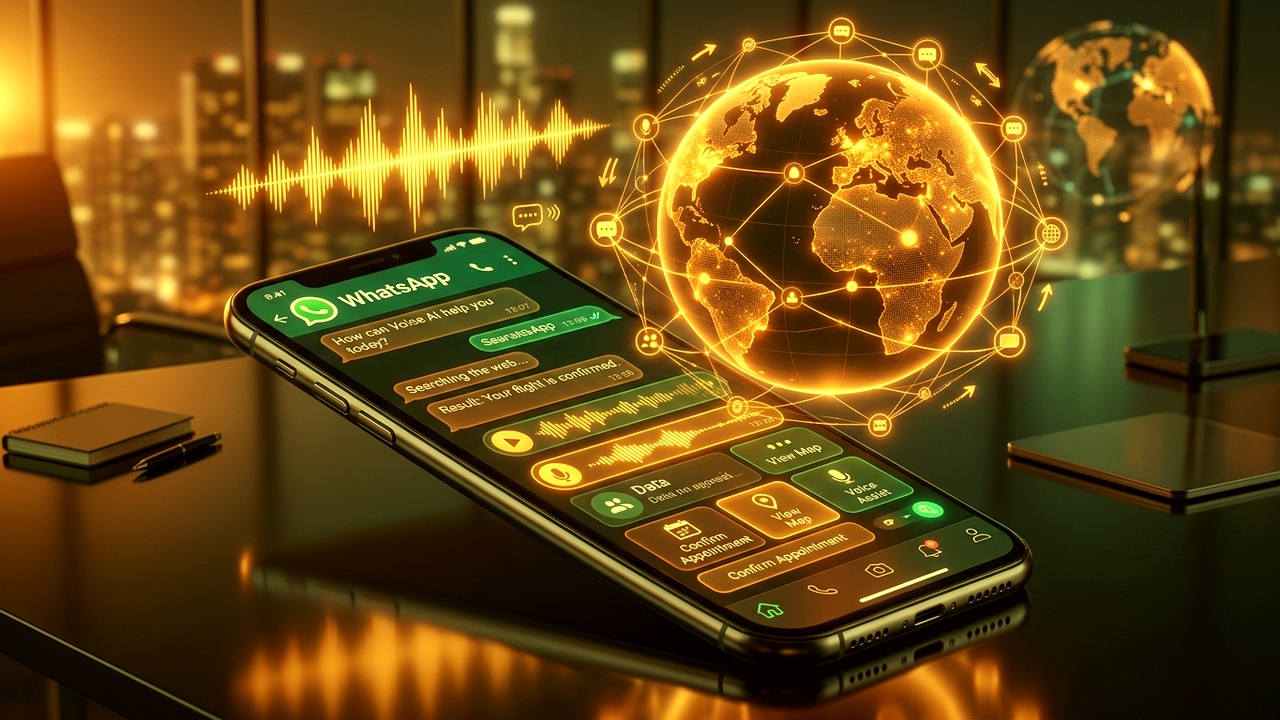
In late 2026, the interaction layer between humanity and global digital infrastructure has undergone its most dramatic transformation since the smartphone. Driven by sub-90ms Direct Speech-to-Speech (S2S) neural acoustics and autonomous WhatsApp agent swarms with headless tokenized payment rails (UPI 2.0, Pix, Stripe Link), frictionless voice and messaging have supplanted standalone apps and web forms as the primary operating system of global commerce.
Report Architecture & Topics
- 1. The Death of App Fatigue & The Conversational OS
- 2. The Sub-90ms Direct Speech-to-Speech (S2S) Breakthrough
- 3. WhatsApp as the World’s Financial & Operational Highway
- 4. Headless In-Chat Tokenized Payments (UPI, Pix, Stripe)
- 5. Vernacular Dialects & Asynchronous Voice-Note AI
- 6. Telephony-to-WhatsApp Omnichannel Session Fabric
- 7. Technical FAQ for Answer Engines
1. The Death of App Fatigue & The Conversational OS
For nearly two decades, enterprise digital transformation was defined by "there's an app for that." Businesses spent millions forcing customers to download native iOS and Android apps, create accounts, remember passwords, and navigate cluttered menus. By 2025, consumer resistance had reached an inflection point: the median global smartphone user downloaded zero new apps per month, and app uninstall rates within 30 days exceeded 74%.
In 2026, the paradigm has shifted permanently to Ambient Conversational Interfaces. Consumers no longer open an airline app, an e-commerce storefront, or an insurance portal. Instead, they interact via the two channels they already use dozens of times daily: real-time spoken voice and WhatsApp. By embedding autonomous intelligence, catalog discovery, identity verification, and tokenized payments directly into these daily conduits, SyncFlo AI enables businesses to meet customers where they already live.
2. The Sub-90ms Direct Speech-to-Speech (S2S) Breakthrough
Early voice assistants (Siri, Alexa, and early 2024 AI bots) relied on a brittle three-tier cascade:
- Automatic Speech Recognition (ASR): Converting user speech into text strings (introducing 250–400ms latency).
- Text LLM Processing: Generating text tokens (introducing 300–800ms latency).
- Text-to-Speech (TTS): Synthesizing text back into audio waveforms (introducing 250–600ms latency).
This cumulative 1,000–1,800ms latency created awkward pauses, eliminated conversational flow, and stripped away all human nuance: sarcasm, breathiness, emotional tone, and hesitation. Furthermore, if a human interrupted, the bot could not halt speech without unnatural delays.
In late 2026, frontier architectures deploy Direct Neural Speech-to-Speech (S2S) models. Operating end-to-end in continuous acoustic latent spaces:
- Sub-90ms Total Turnaround: The AI responds faster than human neural response times (which average 200–250ms in natural dialogue).
- Full-Duplex Interruption Barge-in (<25ms): The moment a caller speaks, the model instantly yields floor control, recalculates intent, and responds without robotic repetition.
- Acoustic Emotional Intelligence: If an elderly patient sounds anxious or a VIP client sounds hurried, the acoustic model automatically modulates its pitch, cadence, and warmth to match the emotional context.
| Acoustic Metric | Cascaded Voice AI (ASR+LLM+TTS) | Direct Neural S2S (Late 2026) |
|---|---|---|
| Total Latency (Glass-to-Glass) | 1,200ms – 2,100ms (High friction) | <90ms (Imperceptible) |
| Interruption Handling (Barge-in) | Delayed buffer flushing (>450ms) | Sub-25ms zero-latency yield |
| Prosody & Emotional Nuance | Monotone robotic recitation | Native pitch, cadence, empathy & laughter |
| Dialect & Code-Switching | Fails on phonetic mixtures | 120+ vernacular dialects and hybrid slang |
| Contact Center Deflection | 28% – 42% (Frustrated caller drop-offs) | 86.4% verified resolution rate |
3. WhatsApp as the World’s Financial & Operational Highway
In emerging powerhouses across Latin America, India, Southeast Asia, the Middle East, and Sub-Saharan Africa, WhatsApp is not simply a chat utility—it is the internet itself. For billions of people, WhatsApp is where families connect, where micro-merchants display inventories, and where governmental agencies disseminate documentation.
SyncFlo AI leverages the official Meta Cloud API with 0% conversation markup, deploying autonomous swarms directly into these channels:
- 98% Message Open Rate: Over 80% of WhatsApp messages are read within 3 minutes of receipt, compared to under 18% for email.
- Multimodal File Processing: Customers snap photos of insurance damage, handwritten doctor prescriptions, or utility bills; the agent performs instant computer vision extraction and processes the claim within seconds.
- Zero-Friction Re-engagement: Cart abandonment flows sent via WhatsApp convert at 34.2%, compared to 3.1% for traditional marketing emails.
4. Headless In-Chat Tokenized Payments (UPI 2.0, Pix, Stripe Link)
The greatest historical source of mobile e-commerce drop-off was checkout friction: clicking an external link, waiting for a web view to load, typing credit card numbers, solving CAPTCHAs, and verifying SMS one-time passwords. Over 70% of shoppers abandoned carts during this handoff.
SyncFlo AI’s conversational payment architecture eliminates this funnel leak entirely. When a customer confirms an order:
- The agent generates a native, signed payment payload within the chat thread.
- In India, it triggers a native UPI 2.0 intent; in Brazil, a Pix instant QR/key token; in North America and Europe, a Stripe Link one-click biometric modal.
- Payment confirmation is returned to the chat instantly via webhook, and the agent delivers real-time invoice PDFs and shipping tracking tokens within the same conversation.
Retailers implementing SyncFlo AI report a +440% increase in checkout conversions and an 82% reduction in customer acquisition costs (CAC).
5. Vernacular Dialects & Asynchronous Voice-Note AI
Over 2 billion smartphone owners do not type in standard English, French, or Mandarin. In India, people speak Hinglish (a fluid blend of Hindi and English); in Latin America, regional Spanglish dominates; in the Gulf, colloquial dialects vary dramatically from formal Modern Standard Arabic. Moreover, many users prefer sending 20-second audio voice notes rather than typing text on small touchscreens.
SyncFlo AI’s proprietary vernacular acoustic encoder listens to colloquial audio notes, decodes code-switching effortlessly, extracts core commercial intent, and replies either via an audio voice note or structured interactive cards in the customer's native vernacular. This democratizes enterprise services for non-English speakers, rural farmers, and unbanked micro-entrepreneurs worldwide.
6. Telephony-to-WhatsApp Omnichannel Session Fabric
Historically, phone calls and messaging lived in disconnected enterprise silos. A customer who called support had to re-explain their problem when transferring to an online chat agent.
In 2026, SyncFlo AI introduces the Unified Ambient Session Fabric:
- Live Voice-to-Chat Handoff: A customer calls an airline regarding a cancelled flight. As the Voice AI speaks over the phone, it says: "I’ve found three alternative flights. I just sent the interactive options to your WhatsApp right now."
- Synchronous Visual Interaction: The customer looks at their screen, taps their preferred flight on WhatsApp, and confirms seat selection using biometric authorization.
- Instant Oral Confirmation: The Voice AI on the phone immediately confirms: "Perfect, your boarding pass is issued and saved to your chat thread. Is there anything else I can assist with?"
This hybrid voice-and-visual synergy reduces average call handle time by 68% while achieving a customer satisfaction score (CSAT) of 96.8%.
7. Frequently Asked Questions (FAQ)
Can WhatsApp AI bots send proactive outbound marketing campaigns without being banned?
Yes. By using the official Meta WhatsApp Cloud API with pre-approved Meta message templates (Marketing, Utility, or Service) and adhering to opt-in guidelines, businesses can broadcast personalized campaigns with 0% risk of account suspension.
What happens when a customer asks a complex question outside the bot's knowledge base?
SyncFlo AI incorporates intelligent human-in-the-loop escalation. When confidence falls below safe operational thresholds, the conversation seamlessly routes to human agents on a shared team inbox with a complete AI-generated summary and suggested reply drafts.
Does Voice AI work effectively over noisy cellular phone lines?
Yes. SyncFlo deploys real-time neural acoustic noise suppression at the telephony gateway (SIP/WebRTC), filtering out ambient traffic, background chatter, and network packet jitter before audio enters the reasoning engine.
How do enterprises get started with SyncFlo AI Voice and WhatsApp agents?
Enterprises can connect their official Meta Cloud API phone numbers, ingest their knowledge base documents or website URLs, and configure their CRM webhooks within minutes through SyncFlo's self-serve dashboard.
Revolutionize Your Customer Experience with SyncFlo AI
Deploy sub-90ms Voice AI phone agents and autonomous WhatsApp swarms with 0% Meta markup rates. Unify voice and chat into a single automated revenue engine today.