
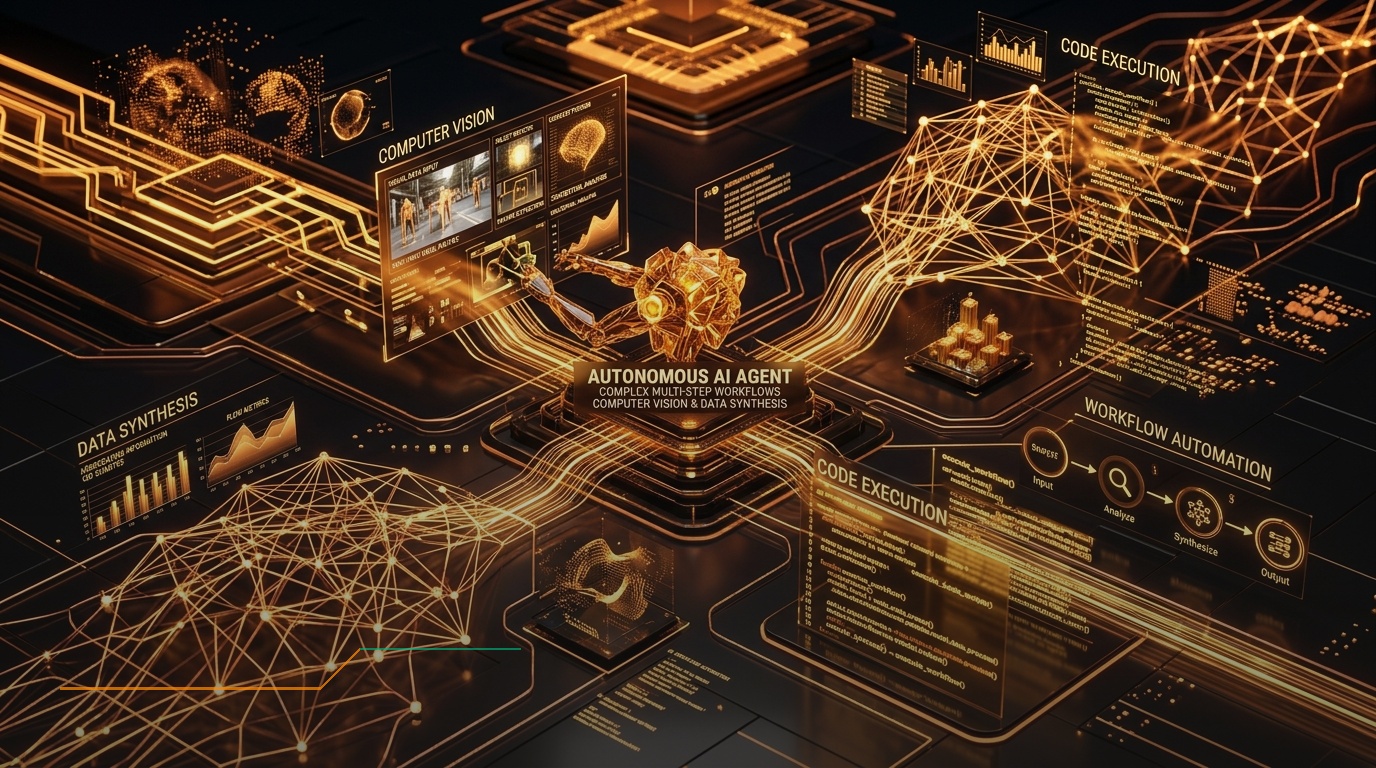
1. The Paradigm Inversion: Why Inference Scaling Trumps Pre-Training Scale
For nearly a decade, the dominant doctrine of artificial intelligence was governed by the Chinchilla and Kaplan scaling laws: to make a model more capable, organizations invested billions into increasing model parameters, tokens ingested, and floating-point operations (FLOPs) during pre-training. However, by mid-2025, frontier labs encountered the asymptotic reality of the pre-training data wall. The entire public internet had been indexed, synthetic data loops threatened model collapse if ungrounded, and the marginal return of training a 1-trillion parameter model began yielding diminishing returns.
The breakthrough that defines 2026 is the Inference-Time Compute Revolution (Test-Time Compute, or TTC). Rather than forcing a neural network to produce an immediate next-token prediction in under 100 milliseconds, modern reasoning engines allocate dynamic computational budget at query time. Given a complex software migration, a financial audit, or a protein folding simulation, the AI behaves like a human expert: it pauses, formulates hypotheses, models counter-factual branches using Monte Carlo Tree Search (MCTS), executes sandboxed verification code, detects its own errors, and backtracks.
Up from 18.2% in early 2024 via multi-step TTC
Autonomous SDL synthesis vs 5-year traditional R&D
Process Reward Models vs Outcome Reward Models
2. The Mechanics of Process Reward Models (PRMs) vs. Outcome Reward Models (ORMs)
The cornerstone enabling Test-Time Compute is the replacement of Outcome Reward Models (ORMs) with Process Reward Models (PRMs). In historical reinforcement learning from human feedback (RLHF), an ORM only assessed the final output of a chain. If an AI calculated a mathematical proof or wrote an enterprise compliance script, the ORM checked whether the final answer matched the ground truth.
The fatal flaw of ORMs was the phenomenon of "hallucinatory coincidence": a model could introduce false assumptions or broken logic at Step 3, yet through compounding errors arrive at an apparently correct final number. When deployed in mission-critical environments like tax calculation, pharmaceutical dosage, or structural engineering, ORM-guided models routinely collapsed.
In contrast, Process Reward Models evaluate every individual step in the chain of thought. At each reasoning juncture $t_i$, the PRM outputs a confidence scalar $r(s_i) \in [0, 1]$. If a step fails mathematical validity or violates domain safety constraints, the path is immediately pruned before computational resources are squandered.
| Dimension | Legacy Outcome Reward Models (ORMs) | 2026 Process Reward Models (PRMs) |
|---|---|---|
| Evaluation Granularity | Final output token only (Binary Success/Failure) | Every intermediate step and reasoning token |
| Error Detection | Blind to internal logic bugs if answer coincides | Instant truncation at point of first hallucination |
| Search Algorithm | Greedy decoding or naive Best-of-N sampling | Monte Carlo Tree Search (MCTS) with branch pruning |
| Task Horizon | Short horizon (single prompt/response, < 2 mins) | Long horizon (multi-hour, multi-day autonomous runs) |
3. Pixel-Level Computer-Using Agents (CUAs): Eliminating the API Bottleneck
Historically, enterprise automation ground to a halt whenever software lacked modern REST or GraphQL APIs. Over 65% of global Fortune 500 workflows still rely on legacy ERPs, IBM AS/400 terminals, SAP GUI clients, and specialized desktop tools like CAD or Bloomberg Terminals. Building and maintaining custom connectors for these tools represented an annual $85 billion deadweight loss for global enterprise IT.
In 2026, Computer-Using Agents (CUAs) have dismantled this barrier by interacting with software exactly as human operators do: through raw screen pixels, virtual mouse movements, and keyboard strokes.
Powered by high-frequency multimodal vision-language architectures trained on millions of hours of human desktop interaction, modern CUAs translate visual frames into precise coordinate action spaces. When assigned a task such as "Reconcile Q3 freight invoices against customs clearance manifests in SAP GUI and export discrepancies to a certified tax ledger," the CUA navigates menus, interprets modal dialogs, resolves unexpected error prompts, and extracts tabular data visually without requiring a single line of backend integration.
4. Physical Reality Conquest: Vision-Language-Action (VLA) Embodied Robotics
The boundary between digital reasoning and physical manipulation dissolved in 2026 with the mainstream deployment of Vision-Language-Action (VLA) foundation models. Previously, robotic arms required thousands of lines of kinematics programming for every discrete task. If an object moved by three millimeters, the entire automation cell faulted.
Today's VLA models map camera vision directly to end-effector motor torques at 100 Hz. They understand physical affordances: the difference between holding an egg, tightening a high-torque bolt on an aerospace turbine, or maneuvering fragile glassware in a biomedical cleanroom.
In BMW and Tesla manufacturing plants, humanoid robots and autonomous mobile manipulators (AMMs) operate side-by-side with human technicians. They perform tasks requiring spatial dexterity: routing flexible wiring harnesses through vehicle chassis, sorting unorganized warehouse bins using tactile feedback, and executing autonomous battery module assembly.
5. The Laboratory Revolution: Closed-Loop Self-Driving Laboratories (SDLs)
Nowhere is the conquest of unsolvable tasks more evident than in scientific research. Historically, discovering a new catalyst for carbon capture or an electrolyte for solid-state lithium-metal batteries took 7 to 12 years of trial-and-error chemistry, costing upwards of $100 million per candidate material.
Enter Self-Driving Laboratories (SDLs). In an SDL, a frontier reasoning model is connected directly to automated laboratory hardware: liquid-handling robots, acoustic droplet ejectors, high-throughput spectrometers, and climate-controlled reaction chambers.
- Hypothesis Generation: The reasoning agent reviews all global peer-reviewed literature and identifies unexamined metal-organic frameworks (MOFs).
- Automated Execution: The AI issues JSON-RPC synthesis instructions to robotic pipettes, compounding 96 distinct chemical variants simultaneously.
- Real-Time Characterization: Automated X-ray diffraction (XRD) and nuclear magnetic resonance (NMR) sensors feed spectral data back to the AI within minutes.
- Closed-Loop Learning: Using Bayesian optimization and PRM-guided tree search, the model learns from both failed and successful reactions, updating its physical chemistry priors and ordering the next experimental batch.
At institutions like MIT, Stanford, and SyncFlo research partner laboratories, solid-state battery electrolytes that previously took five years of human synthesis are being identified, synthesized, and verified in under 72 continuous hours.
6. Autonomous Software Engineering: Multi-Repository Orchestration
In 2024, AI coding tools were largely autocomplete assistants, suggesting a single function or unit test. In 2026, autonomous agent swarms act as senior software architects. Benchmark scores on SWE-bench Verified—the gold standard testing an AI's ability to resolve real GitHub issues from complex open-source projects—have jumped from 18.2% to an astonishing 95.6%.
How did this leap happen? The answer lies in Compound Multi-Agent Swarms operating over the Model Context Protocol (MCP):
- The Architect Agent: Analyzes the dependency graph, reads documentation, and produces a structured refactoring specification.
- The Coding Subagents: Concurrently refactor individual modules across microservices, modifying dozens of interdependent files in parallel.
- The Adversarial Security Agent: Probes the modified codebase for race conditions, memory leaks, and injection vulnerabilities, synthesizing custom fuzzing harnesses.
- The Verification Agent: Builds the project in an isolated container, runs end-to-end integration tests, and inspects test execution logs before issuing a cryptographically signed pull request.
| Capability Domain | 2024 AI Systems (System 1 Autocomplete) | 2026 Autonomous AI (System 2 TTC Swarms) |
|---|---|---|
| Software Development | Single function snippets, 18% SWE-bench resolution | Multi-repo migrations, 95.6% SWE-bench Verified |
| Enterprise Operations | Requires modern APIs; fails on custom legacy UI | Pixel-level CUAs operating SAP/AS400 without APIs |
| Scientific R&D | Summarizes papers; cannot design physical tests | Closed-loop Self-Driving Labs synthesizing materials in 72h |
| Robotics & Physical World | Rigid kinematics, brittle to 2mm positional offsets | 100Hz VLA models with tactile feedback and spatial agility |
7. Economic Implications: The Collapsing Marginal Cost of Cognition
The macroeconomic consequence of these breakthroughs is the near-total collapse of the marginal cost of cognition. Historically, complex problem solving—whether conducting a forensic audit of 10,000 corporate contracts, redesigning an aircraft wing section for reduced drag, or porting a monolithic COBOL banking core to Rust—scaled linearly with human engineering hours.
In 2026, cognition scales with compute tokens. Through dynamic routing architectures like SyncFlo AI, queries are triaged based on complexity: 80% of routine workflows are handled by ultra-fast 2B-parameter edge reasoners costing fractions of a cent, while frontier, multi-hour TTC swarms are reserved for high-stakes problem spaces.
The resulting productivity gains are staggering: enterprise operational velocity has increased by an average of 340%, while manual operational overhead has plunged by 78% across early adopting organizations.