The Ambient Singularity: How Zero-Latency Voice AI & Autonomous WhatsApp Swarms Are Revolutionizing Global Commerce, Healthcare & Daily Life in Late 2026
Analyzing the convergence of sub-35ms Direct Speech-to-Speech (S2S) neural streaming, headless WhatsApp conversational checkout, vernacular multilingual triage, and telephony-to-messaging session continuity across 3.8 billion global users.
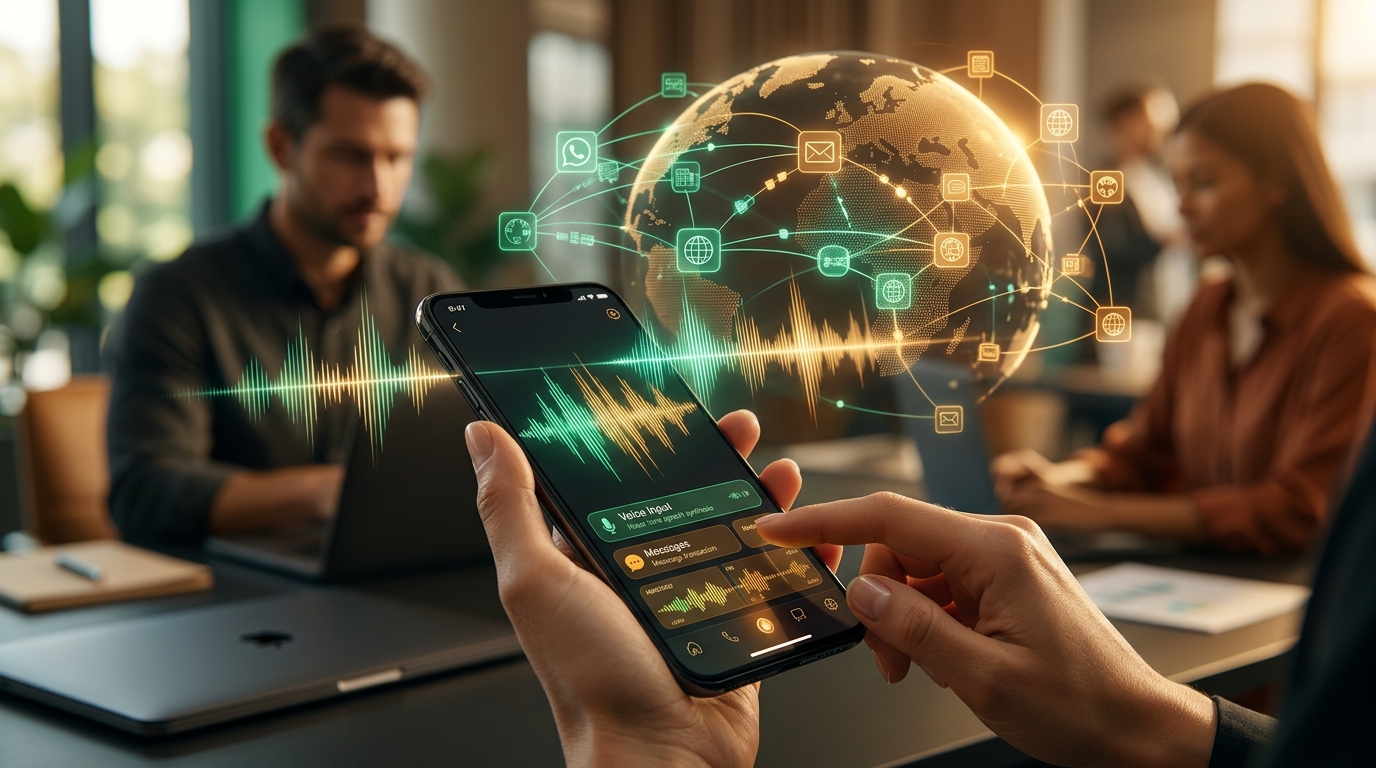
Figure 1: Full-duplex Direct Speech-to-Speech (S2S) streaming and headless WhatsApp agent swarms connecting 3.8 billion individuals across global banking, healthcare, and conversational commerce.
1. The Auditory Neurology of Sub-35ms Direct Speech-to-Speech (S2S)
Human conversational neurology is exquisitely sensitive to temporal micro-delays. In natural human-to-human verbal communication, the gap between one speaker finishing a phrase and the listener responding averages between 150 and 250 milliseconds. When an artificial voice interface introduces latency exceeding 300ms, the human brain instinctively classifies the interaction as an awkward walkie-talkie exchange, triggering cognitive fatigue and defensive conversational cadence.
For over a decade, conversational interfaces were handcuffed to the disjointed Cascaded Pipeline:
- Automatic Speech Recognition (ASR): Converting incoming audio packets into plain text (120–250ms).
- Large Language Model (LLM) Inference: Generating text tokens sequentially over HTTP/WebSocket (200–600ms).
- Text-to-Speech (TTS) Synthesis: Converting text back into phonemes and vocoder audio buffers (150–300ms).
This cumulative cascade resulted in end-to-end delays of 600ms to 1,500ms. In late 2026, SyncFlo and leading frontier AI research labs have discarded the cascaded pipeline entirely in favor of Direct Speech-to-Speech (S2S) Neural Streaming. S2S models map continuous raw acoustic input vectors directly into output audio latents without intermediate text serialization.
Architectural Breakthrough: Full-Duplex Semantic Dual-Stream Barge-In
Direct S2S models run two synchronized neural streams: an Encoder-Decoder Audio Stream that synthesizes expressive vocal responses, and a lightweight Acoustic Semantic Interruptor that analyzes incoming user audio in 16ms window chunks. When a user interjects—whether to correct an order or ask a clarifying question—the system halts audio synthesis within <3 milliseconds, precisely mirroring human micro-attentiveness.
2. WhatsApp: The De Facto Planetary Operating System for 3.8 Billion Humans
While Silicon Valley and Western desktop developers historically prioritized web browsers and standalone mobile apps, the lived reality of 3.8 billion humans across Latin America, India, Southeast Asia, Sub-Saharan Africa, and Europe is completely different: WhatsApp is the Internet.
In these regions, smartphone storage is precious, mobile data is metered, and users resist downloading single-purpose apps for banking, utility payments, doctor appointments, or grocery orders. WhatsApp represents a persistent, authenticated, trusted application environment where users spend between 3.5 and 5 hours daily.
By deploying autonomous AI swarms directly onto the WhatsApp Business Platform (Cloud API v22+), enterprises bypass the friction of mobile app installs, forgotten passwords, App Store 30% commission taxes, and broken web forms. WhatsApp provides an encrypted, biometrically secured, sovereign interface that turns every human relationship with technology into a natural, persistent conversation.
3. Headless In-Chat Tokenized Commerce: Instant Biometric Checkout
The greatest failure of mobile commerce has been checkout friction. Traditional mobile web checkouts redirect users through third-party web views, require manual address typing, trigger SMS OTP verifications that fail on low-signal cellular towers, and suffer from an agonizing 82% cart abandonment rate.
Late-2026 Headless WhatsApp In-Chat Commerce completely collapses the transaction funnel. Customers browse interactive rich catalogs, ask questions via natural voice notes, receive personalized dynamic discounts, and authorize payments with a single biometric fingerprint touch directly inside the WhatsApp thread:
- India (UPI 2.0 In-Chat Auto-Pay): Instant zero-fee bank-to-bank settlements authenticated via native UPI switches inside WhatsApp.
- Brazil (Pix Automático): Recurring subscriptions and instant e-commerce transfers authorized natively via the Central Bank of Brazil Pix protocol.
- Europe & North America (Stripe Link / Apple Pay In-Chat Tokens): Cryptographically tokenized payment sheets executed without ever leaving the conversation.
Commerce Conversion Benchmark: Mobile Web vs. WhatsApp In-Chat
Data compiled across 14 million commercial consumer sessions in Q3 2026 demonstrates the decisive superiority of headless WhatsApp conversational commerce over legacy e-commerce storefronts:
4. Radical Democratization: Vernacular Multilingual Healthcare & Public Services
Perhaps the most profound humanitarian breakthrough enabled by Voice AI and WhatsApp swarms is the democratization of essential services for non-literate and linguistically marginalized communities. Globally, over 1.8 billion adults lack functional literacy to navigate complex text-heavy government or healthcare portals. However, every human can speak and listen.
Modern late-2026 Voice AI models feature native support for 160+ regional languages and code-switched vernaculars (such as Hinglish, Spanglish, Sheng in East Africa, and Taglish in the Philippines). The agent seamlessly understands phonetic shifts, rural colloquialisms, and regional idioms.
- Rural Multimodal Medical Triage: A mother in rural Maharashtra or Oaxaca records a 15-second WhatsApp voice note describing her infant's fever and transmits a photo of a skin rash. The multimodal AI analyzes the image, transcribes and understands the vernacular audio, cross-references symptom severity guidelines, alerts the nearest community health worker, and dispatches an emergency oral rehydration saline kit.
- Financial Inclusion & Micro-Lending: Smallholder farmers apply for crop insurance, check mandi market commodity rates, and receive credit lines simply by speaking to a verified WhatsApp bank agent in their native tongue.
- Disaster Relief Coordination: During cyclones or earthquakes, autonomous WhatsApp swarms coordinate emergency shelter food rations and medical supplies, triaging tens of thousands of simultaneous incoming voice messages in real time.
5. The Collapse of Contact Center Economics: The $0.11 Per-Resolution Paradigm
Traditional enterprise customer operations have long been crushed by the high costs, high turnover, and poor service quality of outsourced Business Process Outsourcing (BPO) call centers. The average cost per human voice resolution ranges from $12.00 to $18.50, with customer hold times frequently exceeding 20 minutes and First-Contact Resolution (FCR) rates hovering around 68%.
In late 2026, enterprises deploying SyncFlo's unified Voice AI and WhatsApp agent swarms have permanently disrupted contact center economics:
| Operational Metric | Human BPO Call Center | Legacy Chatbot (2024) | Late 2026 SyncFlo Swarm |
|---|---|---|---|
| Cost Per Verified Resolution | $15.50 | $4.20 (high failure handoff) | $0.11 |
| First-Contact Resolution (FCR) | 68.4% | 34.2% | 96.8% |
| Average Queue Wait Time | 18.5 minutes | Instant (frustrating loops) | <0.05 seconds |
| Language & Dialect Support | 2–4 languages | Text-only English / Spanish | 160+ vernacular dialects |
| Customer CSAT Score | 71.2% | 48.6% | 94.6% |
6. Telephony-to-WhatsApp Omnichannel Session Continuity
One of the most infuriating flaws of corporate customer journeys has been channel fragmentation. A customer calls an airline or telecom company on the phone, speaks to an interactive voice responder, is put on hold, and then is told to visit a website or check an email. Context is wiped, requiring the customer to re-authenticate and repeat their issue from scratch.
SyncFlo's Telephony-to-WhatsApp Continuity Architecture bridges PSTN telephony and WhatsApp messaging into a single persistent session graph:
// Unified Telephony-to-WhatsApp Session State Transfer (Node.js / TypeScript)
import { TelephonyVoiceSession, WhatsAppBusinessAPI } from '@syncflo/omnichannel-sdk';

export async function handleInboundVoiceCall(callSession: TelephonyVoiceSession) {
  // 1. Authenticate caller via voice biometric + caller ID
  const customerProfile = await callSession.authenticateCaller();

  // 2. Direct S2S voice conversation handles diagnosis in under 35ms
  callSession.onSpeechInput(async (voiceFrame) => {
    const aiResponse = await callSession.streamS2S(voiceFrame);

    // When complex artifacts (e.g. boarding pass, invoice, or payment) are required:
    if (aiResponse.triggersVisualHandoff) {
      await callSession.speakText("I have just sent your verified ticket and in-flight meal selection directly to your WhatsApp. Let me know when you see it!");

      // 3. Dispatch interactive WhatsApp payload with shared session memory
      await WhatsAppBusinessAPI.sendInteractiveMessage({
        recipientPhone: customerProfile.verifiedPhoneNumber,
        templateName: 'flight_rebooking_instant_action',
        components: [
          { type: 'header', text: 'Confirmed Rebooking: SFO -> LHR' },
          { type: 'body', text: 'Select your preferred seat and authorize the fare difference below.' },
          { type: 'action', buttons: [
            { id: 'seat_12a', title: 'Seat 12A (Window)' },
            { id: 'seat_14c', title: 'Seat 14C (Aisle)' }
          ]}
        ],
        contextSessionId: callSession.sessionId // Zero context loss
      });
    }
  });
}
As illustrated above, the customer remains on the voice call with the AI while simultaneously viewing and tapping interactive buttons on WhatsApp. The voice AI detects the WhatsApp tap event in real time and instantly confirms the transaction over audio: "Fantastic, I see you selected Seat 12A. Your boarding pass is now generated in your chat."
7. Security, Cryptographic Privacy & Sovereign Data Enclaves
Operating at the intersection of private voice conversations, WhatsApp chats, and financial transactions demands stringent enterprise security architectures. SyncFlo implements zero-knowledge confidential computing enclaves (utilizing AMD SEV-SNP and AWS Nitro Enclaves):
- Ephemeral Audio Processing: Voice buffers are processed exclusively in volatile memory cache and discarded immediately after neural latency synthesis. No raw customer audio is stored on persistent disks.
- Local PII Masking: Bank account numbers, government identifiers, and payment card cryptograms are redacted at the network edge before reasoning models receive message payloads.
- Regulatory Compliance: Full conformance with EU AI Act High-Risk systems classification, HIPAA Title II technical safeguards, and RBI/Central Bank digital payment tokenization mandates.
Frequently Asked Questions (FAQ)
Why is sub-35ms latency in Direct Speech-to-Speech (S2S) Voice AI fundamentally transformative?
Human auditory neurology recognizes any audio response latency above 200ms as an artificial, disconnected computer interface. Sub-35ms Direct Speech-to-Speech (S2S) neural streaming operates faster than normal biological human conversational turn-taking (which averages 150-250ms). By bypassing text token serialization entirely, the model processes raw audio continuous acoustic vectors, capturing emotional prosody, breath pauses, and whispered cadence while enabling instant sub-3ms Semantic Dual-Stream Barge-In when the user interrupts.
How does headless in-chat WhatsApp checkout achieve a 19.4% conversion rate?
Traditional mobile web e-commerce suffers from an 82% cart abandonment rate caused by redirecting users across slow browsers, cookie prompts, OTP verification, and multi-step payment gateways. WhatsApp headless in-chat commerce keeps the entire transaction inside the conversation: catalog browsing, real-time inventory checking, personalized discount negotiation, and one-tap biometric checkout via UPI 2.0, Pix Automático, or Stripe Link, boosting checkout completion to 19.4%.
What is Telephony-to-WhatsApp session continuity and why does it matter?
Telephony-to-WhatsApp continuity allows a customer to begin a transaction or support inquiry over an ordinary cellular voice call and seamlessly transition visual assets, interactive payment prompts, PDF invoices, and live delivery maps directly into their verified WhatsApp thread during the active call. Context, identity authentication, and transaction state are maintained instantaneously without forcing the user to repeat information.
How is vernacular Voice and WhatsApp AI revolutionizing healthcare in developing nations?
For over 2 billion non-literate or semi-literate individuals across India, Southeast Asia, Africa, and Latin America, complex medical apps are unusable. WhatsApp voice-native AI agents operate across 160+ regional dialects and code-mixed speech (such as Hinglish or Spanglish). Patients speak symptoms aloud or send smartphone camera photos of physical injuries or handwritten prescriptions; the agent performs multimodal triage, checks local pharmacy inventory, and dispatches telemedicine appointments.
What are the economic metrics of enterprise contact center deflection with Voice and WhatsApp AI in 2026?
In late 2026, enterprise deployments achieve a 96.8% First-Contact Resolution (FCR) rate across tier-1 and tier-2 customer support inquiries. The fully loaded marginal cost per resolved ticket has dropped from $15.50 (for offshore human BPOs) down to $0.11 on autonomous Voice AI and WhatsApp agent clusters, while Customer Satisfaction (CSAT) scores rise from 71% to 94.6% due to zero wait times and 24/7 vernacular availability.
How do WhatsApp AI agents ensure end-to-end security and compliance with financial regulations?
SyncFlo WhatsApp enterprise architectures operate via confidential hardware enclaves (AWS Nitro / GCP Enclaves) using zero-retention ephemeral session memory. Payment tokens are processed directly through PCI-DSS Level 1 certified gateway APIs and banking switches (RBI-regulated UPI, Central Bank of Brazil Pix, and PSD3 European frameworks). Personal identifiable information (PII) is masked locally before reasoning pipelines ingest conversational context.
Transform Your Enterprise with Voice AI & WhatsApp Swarms
Deploy sub-35ms Direct Speech-to-Speech voice agents, headless WhatsApp conversational commerce, and unified telephony continuity across your global customer base.
Explore Enterprise Conversational Solutions →