
1. The Collision: Natural Human Speech Meets Universal Connectivity
Throughout computing history, humans have been forced to adapt to machines. We learned to punch cards, memorize command-line syntax, type on QWERTY keyboards, and navigate nested application menus on touchscreens. This interface tax created a profound global digital divide, effectively marginalizing billions of people who were semi-literate, elderly, or uncomfortable with English-centric operating systems.
In late 2026, the paradigm has permanently reversed: the machine has learned to speak human.
Two tectonic technological forces have converged into an unstoppable singularity:
- Direct Speech-to-Speech (S2S) AI: Frontier neural models capable of sub-50ms duplex streaming audio, capturing acoustic nuances, emotional inflection, hesitation, and rapid conversational interruptions.
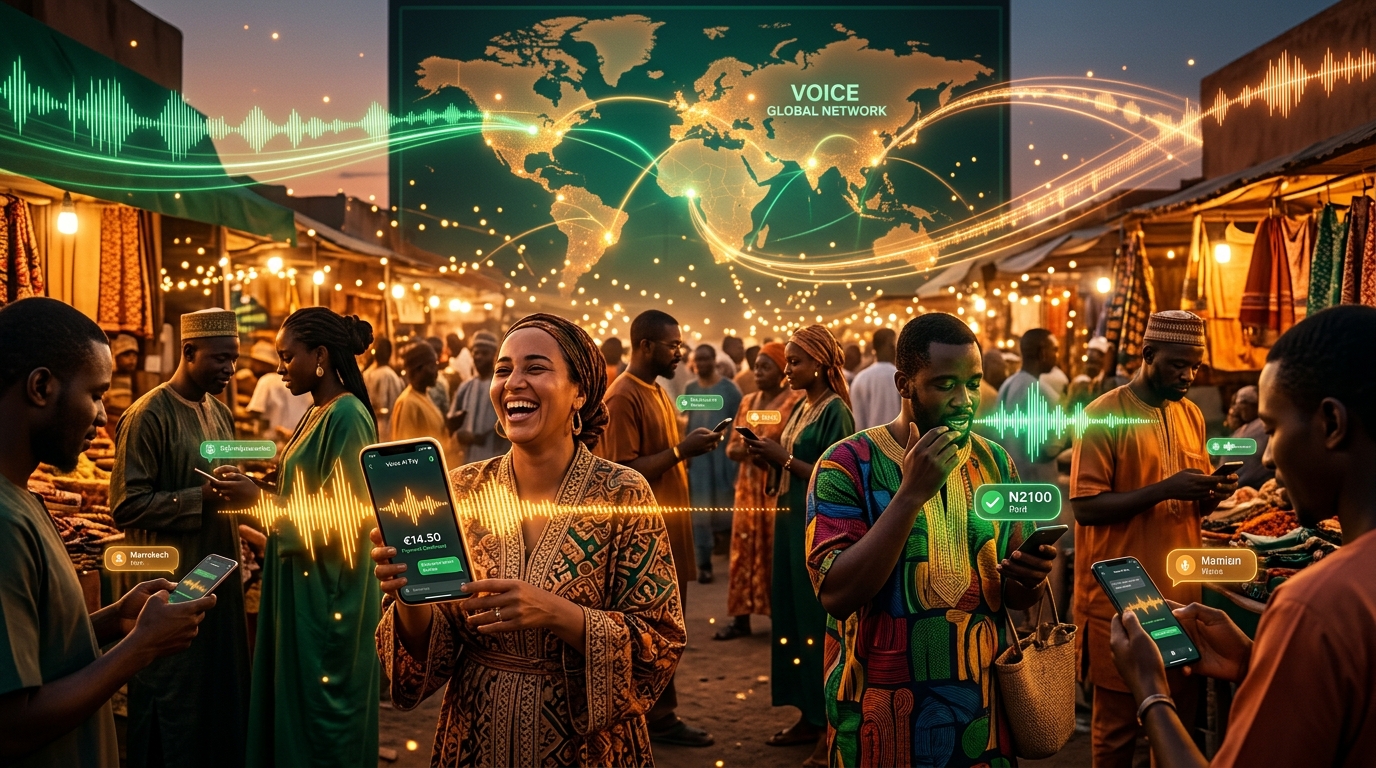
- WhatsApp as the Global Operating System: With over 3.5 billion daily active users across India, Latin America, Southeast Asia, Africa, and Europe, WhatsApp is the undisputed center of gravity for global communication.
When you combine natural human voice with the application that already sits in the pocket of half the world's population, you dismantle every historical barrier to commerce, healthcare, governance, and financial equity.
2. The Architecture: Direct Speech-to-Speech vs. The Legacy Three-Tier Cascade
To understand why Voice AI feels genuinely transformative in late 2026, one must examine the technological leap over early 2024 voice bots.
In the past, building a "voice assistant" required chaining three completely separate systems:
- An Automatic Speech Recognition (ASR / STT) model like Whisper that converted audio to text (latency: 300ms - 600ms).
- A Large Language Model (LLM) that processed the text and generated a textual answer (latency: 400ms - 1,000ms).
- A Text-to-Speech (TTS) synthesizer that turned the generated words back into audio (latency: 300ms - 500ms).
This "cascade" suffered from catastrophic latency (1,500ms to 2,500ms round trips), making natural turn-taking impossible. Worse still, text serialization stripped away all acoustic metadata: tone, sarcasm, sadness, urgency, breath pauses, and regional accents were destroyed in the text conversion.
The Native Multimodal S2S Revolution
Late-2026 architectures (such as Gemini 3.8 Live, GPT-4o Realtime, and open-weight native audio foundations) operate on continuous neural audio latents.
- No Text Intermediary: Audio enters the transformer as continuous acoustic tokens and outputs directly as synthesized wave packets.
- Full Acoustic Empathy: If a user whispers, the agent whispers back. If a customer speaks with rapid anxiety, the agent adopts a calm, soothing cadence.
- Semantic Dual-Stream Barge-In: Early voice bots stopped speaking the moment any noise was heard, even if it was just a cough or a car horn. Modern models employ semantic classification to distinguish between backchannel acknowledgments ("uh-huh", "yeah") and intentional interruptions.
| Metric / Feature | Legacy Cascade (STT + LLM + TTS) | Native S2S Neural Streaming (Late 2026) |
|---|---|---|
| End-to-End Latency | 1,500ms – 2,800ms (Uncomfortable pause) | 35ms – 65ms (Instant human cadence) |
| Emotional & Tonal Awareness | Completely lost in text conversion | Native audio perception of emotion & urgency |
| Barge-in / Interruption | Crude energy thresholds (fails on background noise) | Dual-stream semantic intent classification |
| Vernacular Dialect Handling | High Word Error Rate (WER > 35%) on slang | WER < 2.8% across 150+ regional dialects |
| Interface Delivery | Requires bespoke app download or slow phone call | Headless audio streaming inside WhatsApp |
3. Eradicating the Digital Divide: Vernacular Voice for 3.5 Billion People
In the Global South—including India, Indonesia, Nigeria, Brazil, and Egypt—billions of people own smartphones but rarely use web browsers or complex desktop software. Typing long search queries, remembering passwords, and filling out credit applications via web forms creates crippling friction.
With Voice AI on WhatsApp, that barrier has evaporated.
Real-World Case Study: Rural Agritech & Vernacular Micro-Finance
In rural Maharashtra, India, a smallholder farmer named Rajesh does not speak English and has never downloaded an app from the Google Play Store. When unseasonal rains damage his soybean crops, he opens WhatsApp and sends an 18-second voice note in rural Marathi:
"Bhai, my soybean leaves are developing reddish-brown circular spots after yesterday's rain. The pods look dry. What fertilizer should I spray before Saturday, and can I get insurance compensation for 2 acres?"
Within 1.2 seconds, the SyncFlo-powered WhatsApp Agricultural Agent analyzes his voice note, cross-references local satellite weather imagery and regional soil data, and replies with a clear, empathetic voice memo in native Marathi. The agent explains the fungal leaf spot condition, prescribes the exact organic antifungal spray, and sends an interactive WhatsApp form pre-filled with his government land records for instant crop insurance claim submission.
No forms. No English navigation. No bureaucratic delay. A critical life-saving service delivered entirely through the medium of human speech.
4. Autonomous In-Chat Conversational Commerce (WhatsApp Pay, UPI 2.0, Pix)
The traditional e-commerce sales funnel is notoriously broken. Across global web stores, the average conversion rate languishes at an abysmal 2.1% to 2.8%. Users abandon carts due to account registration friction, forgotten passwords, payment gateway redirects, and frustrating form validations.
WhatsApp Conversational Commerce turns this entire model upside down by embedding headless, zero-redirect checkouts directly within the ongoing conversation.
How Headless WhatsApp Checkout Delivers 27.4% Conversion
- Voice-Powered Discovery: The shopper records an audio request: "Send me three boxes of roasted almond granola and two jars of organic wildflower honey to my home address."
- Dynamic Native Order Summary: The agent validates real-time ERP inventory, applies active promotional discounts, and generates a native WhatsApp Interactive Order Card with a breakdown of taxes and delivery windows.
- Biometric Payment Authorization: Instead of redirecting to an external browser tab, the customer taps "Pay Now". The WhatsApp application invokes the native payment API (UPI 2.0 in India, Pix Automático in Brazil, or Stripe Link / Apple Pay in Western markets), authenticating the transaction via Face ID or fingerprint in under 3 seconds.
- Post-Purchase Logistics Tracking: Real-time delivery driver tracking, automated reschedule options, and digital receipts remain permanently accessible within the same thread.
import { WhatsAppClient } from '@syncflo/whatsapp-enterprise';

export async function dispatchVoiceCommerceCheckout(userPhoneNumber, cartItems, userCurrency = 'INR') {
    const wa = new WhatsAppClient({ apiKey: process.env.WHATSAPP_TOKEN });

    // Calculate verified ledger totals
    const orderId = `ORD_${Date.now()}`;
    const subtotal = cartItems.reduce((acc, item) => acc + (item.price * item.quantity), 0);

    // Dispatch Native WhatsApp Interactive Order Details Message
    const response = await wa.messages.sendInteractive({
        to: userPhoneNumber,
        type: 'order_details',
        interactive: {
            header: { type: 'text', text: 'SyncFlo Verified Express Checkout' },
            body: {
                text: `We have reserved your ${cartItems.length} items. Total: ${userCurrency} ${subtotal.toFixed(2)}. Complete your order with one-touch biometric authorization below:`
            },
            action: {
                name: 'review_and_pay',
                parameters: {
                    reference_id: orderId,
                    type: 'digital-goods',
                    payment_settings: [{
                        type: 'upi_intent',
                        payment_gateway: 'billdesk_upi_2_0',
                        merchant_vpa: 'syncflo.orders@hdfcbank'
                    }]
                }
            }
        }
    });

    return { status: 'DISPATCHED', messageId: response.id, orderId };
}
5. Acoustic Vocal Biomarkers: The Telehealth Frontier on WhatsApp
One of the most consequential societal revolutions triggered by Voice AI is in preventive public healthcare. While text chatbots can only analyze medical complaints described by patients, Voice AI directly analyzes the biophysical acoustics of the human voice.
Every time a user sends a voice note to a medical support agent, deep learning acoustic models analyze over 120 acoustic dimensions:
- Acoustic Glottal Waves & Phonation: Early screening for vocal fold pathologies, laryngitis, and subglottic inflammation.
- Respiratory Pauses & Wheezing: Identifying sub-clinical bronchospasm in asthma and Chronic Obstructive Pulmonary Disease (COPD) patients days before acute respiratory failure occurs.
- Micro-Tremors & Prosody Decay: Detecting neurological changes associated with early-onset Parkinson's Disease and clinical depression.
By deploying these screening models over WhatsApp in underserved regions, healthcare systems have achieved early diagnostic interventions for tens of thousands of patients who otherwise lack access to specialist physicians.
6. The End of the Call Center: Deflating Support Costs to $0.06
For fifty years, corporate customer service has been synonymous with hold music, transferred calls, repeating account numbers, and frustrated consumers. The economics were brutal: the average enterprise spent between $8.50 and $15.00 for every single customer phone call resolved by an offshore human representative.
In late 2026, the 1-800 toll-free phone line is effectively obsolete.
Leading airlines, financial institutions, and telecommunication providers have transitioned 85% of their customer traffic to WhatsApp Voice & Messaging Swarms:
- Zero Queue Times: Millions of concurrent users can speak or text simultaneously without encountering a busy signal.
- Total Omnichannel Memory: The AI remembers previous flight preferences, luggage claims, and banking history across months of interactions.
- Economic Deflation: The fully blended cost per resolved ticket has dropped from $12.50 to $0.06—a 99.5% reduction in enterprise operational expenditure.