The Conversational Frontier: How Voice AI and WhatsApp Agents Are Revolutionizing Global Commerce in 2026
The robotic "Press 1 for Sales" era is dead. Today, direct neural Speech-to-Speech models operating below 150ms latency and autonomous WhatsApp swarms are handling billions in real-time transactions, redefining human-computer interaction across the globe.
SyncFlo Conversational AI Engineering
Real-Time Voice Systems & WhatsApp Omnichannel Group
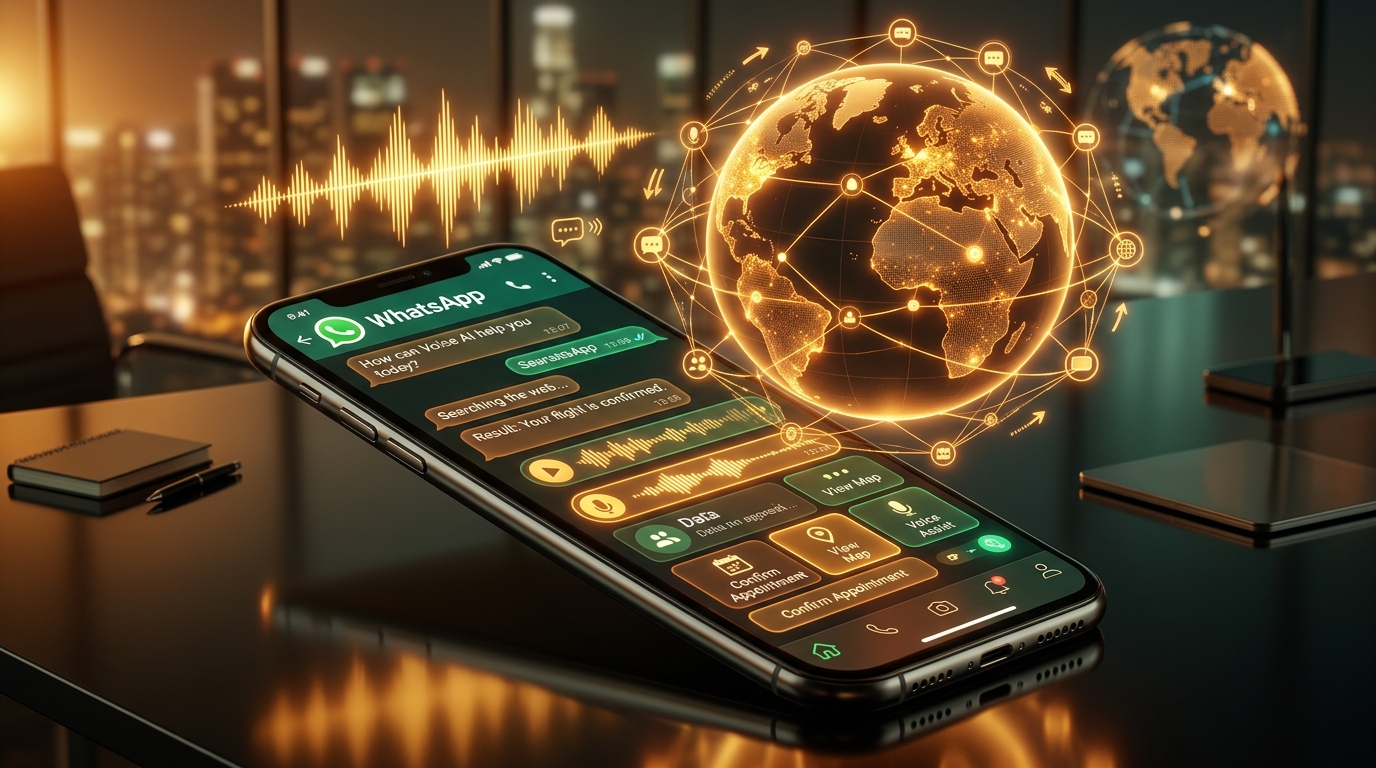
Figure 1: Direct Speech-to-Speech acoustic streaming and WhatsApp Business API agents powering global multi-turn commerce and customer care.
Direct Answer: How Voice AI & WhatsApp AI Revolutionize the World
Voice AI and WhatsApp AI revolutionize global commerce in 2026 by removing friction across 3.2 billion people: Direct Speech-to-Speech (S2S) models provide sub-150ms human-like conversational phone calls with native interruption handling, while autonomous WhatsApp agents execute end-to-end purchases, claims processing, and multimodal OCR verification directly inside the world's most ubiquitous messaging app.
Contents & Key Findings
- 1. The Death of IVR: Direct Speech-to-Speech (S2S) Neural Breakthroughs
- 2. WhatsApp: The Universal Operating System of Global Business
- 3. The Continuous Voice-to-WhatsApp Omnichannel Journey
- 4. Vernacular Multilingual Equity: Speaking 100+ Dialects
- 5. Enterprise Economics: Cost Reductions & Revenue Multipliers
- 6. Technical Architecture: MCP Tools, Vector RAG & CRM Sync
- 7. Real-World Case Studies: Banking, Healthcare & Logistics
- 8. Frequently Asked Questions (FAQ)
1. The Death of IVR: Direct Speech-to-Speech (S2S) Neural Breakthroughs
For over three decades, enterprise customer telephony was characterized by agonizing Interactive Voice Response (IVR) phone trees, robotic hold music, and frustrating voice recognition systems that broke at the slightest accent or background noise.
The early attempts to modernize phone support with AI (2022–2024) relied on a cascaded architecture: the caller's audio was sent to an Automatic Speech Recognition (ASR) engine, converted into text, processed by a Large Language Model (LLM), and then converted back into audio via a Text-to-Speech (TTS) synthesizer. This multi-hop pipeline suffered from severe latency bottlenecks (1,500ms to 3,000ms), unnatural pauses, and complete loss of human vocal cues like laughter, hesitation, urgency, or sarcasm.
In 2026, Direct Speech-to-Speech (S2S) foundation models have made cascaded pipelines obsolete:
- Ultra-Low Acoustic Latency (<150ms): Audio waveforms are streamed directly through the neural network, matching the natural 150–200ms conversational cadence of human dialogue.
- Full-Duplex Interruption & Turn-Taking: The model listens and speaks simultaneously. When a user interrupts to correct their order, the AI immediately stops, acknowledges the change, and recalibrates without awkward buffer delays.
- Prosodic & Emotional Modulation: The agent detects frustration, confusion, or satisfaction in the caller's voice timbre and automatically adjusts its pitch, pacing, and warmth to de-escalate tensions and build empathy.
Telephony Architecture Comparison: 2024 vs. 2026
| Metric / Feature | Legacy Cascaded Bots (ASR → LLM → TTS) | SyncFlo Direct Speech-to-Speech (S2S) |
|---|---|---|
| Total Response Latency | 1,500ms – 3,200ms (Unnatural pauses) | 120ms – 180ms (Instant human cadence) |
| Interruption Handling | Audio collision; speaks over caller | Full-duplex instant cutoff & real-time pivot |
| Emotion & Nuance | Flat synthetic voice; loses acoustic context | Acoustic waveform conditioning; empathetic inflection |
| Background Noise Tolerance | High transcription error in cars/airports | Deep neural beamforming & noise suppression |
2. WhatsApp: The Universal Operating System of Global Business
While Western tech giants built walled web dashboards, the rest of the world—encompassing 3.2 billion active users across India, Brazil, Mexico, Nigeria, Indonesia, Germany, and the UK—chose WhatsApp as their primary digital identity.
In 2026, the WhatsApp Business API powered by autonomous AI agent swarms has evolved into the world's most powerful commerce engine:
- 98% Open Rate vs. 18% Email: WhatsApp messages are opened within 3 minutes on average, delivering unmatched engagement for transactional alerts, abandoned cart recoveries, and service reminders.
- Frictionless In-Chat Payments: Customers can browse dynamic product catalogs, select sizes or options, and complete payments via unified instant payment rails (UPI in India, Pix in Brazil, WhatsApp Pay, Stripe, Apple Pay) in under 15 seconds without leaving the chat.
- Multimodal Document Processing & OCR: A customer filing an auto insurance claim simply snaps a photo of their damaged vehicle or hospital bill and sends it to the WhatsApp business number. The AI agent performs sub-second computer vision OCR, cross-references policy coverage, verifies authenticity, and dispatches claim approvals autonomously.
Active WhatsApp users across 180+ countries accessible via automated AI agents.
Higher conversion compared to standard mobile web browser checkout flows.
Immediate autonomous deflection and instant resolution of Tier 1 & Tier 2 queries.
3. The Continuous Voice-to-WhatsApp Omnichannel Journey
The true breakthrough for forward-thinking enterprises is not choosing between Voice AI and WhatsApp AI, but combining them into a frictionless conversational continuum.
Consider an airline flight delay or an urgent insurance claim. In traditional operations, a user talks on the phone, is told to visit a website, forgets their password, and abandons the transaction.
In the SyncFlo architecture, the Voice AI agent detects the caller's phone number and initiates a live synchronized WhatsApp channel simultaneously:
- Caller dials the helpline: The Voice AI agent greets them by name, identifies their flight cancellation in real-time via CRM integration, and explains alternative flight options verbally in natural dialogue.
- Instant in-call visual delivery: While still on the phone, the AI says: "I just sent 3 alternative flight options and seat maps to your WhatsApp—tap your preferred flight to confirm."
- Zero-friction confirmation: The user taps "Option 2" on WhatsApp, receives an instant boarding pass with a QR code, and the Voice AI confirms: "Great! I see you selected Flight 408. Your boarding pass is ready in your WhatsApp chat. Have a wonderful trip!"
4. Vernacular Multilingual Equity: Speaking 100+ Dialects
Historically, software interfaces excluded hundreds of millions of people who could not read complex English text or type accurately on touchscreens. Voice AI and WhatsApp voice messaging have democratized digital access.
Modern Speech-to-Speech models natively comprehend over 100 languages, including complex code-switched colloquial languages such as Hinglish (Hindi-English mix), Spanglish, and Moroccan Darija. A rural farmer can send a 15-second WhatsApp voice note describing crop pest symptoms, and the AI agent transcribes the dialect, queries agronomy databases, and replies with a localized audio voice note and clear diagram of the exact remedy required.
5. Enterprise Economics: Cost Reductions & Revenue Multipliers
The business case for deploying conversational AI swarms spans both aggressive operational savings and net-new revenue creation:
- Cost per Interaction: Traditional human phone support costs between $6.50 and $12.00 per resolution. SyncFlo Voice AI and WhatsApp agents reduce the marginal cost per resolution to under $0.14.
- Zero Queue Abandonment: Infinite elastic scalability eliminates peak-hour hold times during product launches, holiday seasons, or flight disruptions.
- Proactive RevOps & Re-Engagement: WhatsApp agents dynamically trigger contextual abandoned cart sequences, renewal notifications, and warranty upsells based on real-time customer behavior signals.
async function handleInboundTelephonyCall(callSession) {
const voiceAgent = await VoiceAI.connect(callSession, { latency: 140 });
const intent = await voiceAgent.detectIntent();
// Instant Omnichannel Handoff to WhatsApp during live call
if (intent.requiresRichMedia) {
await WhatsAppAgent.sendInteractiveCard({
to: callSession.callerNumber,
template: "invoice_settlement_v2",
data: { invoiceId: intent.invoiceId, amount: intent.amount }
});
voiceAgent.say("I've sent the secure payment link to your WhatsApp. You can tap to complete it now.");
}
}
6. Technical Architecture: MCP Tools, Vector RAG & CRM Sync
Building high-reliability conversational systems requires robust integration with enterprise backends. SyncFlo's architecture standardizes on three core pillars:
- Model Context Protocol (MCP): Agents invoke internal microservices, payment gateways, and inventory systems using standardized MCP tool servers, ensuring safe execution boundaries and strict audit logging.
- Hybrid Vector & Graph RAG: Real-time product catalogs and technical knowledge bases are indexed in hybrid vector-graph databases, guaranteeing factual accuracy and eliminating hallucinated pricing or policy details.
- Bidirectional CRM Sync: Every voice transcript, WhatsApp interaction, and customer sentiment score is immediately synced to Salesforce, HubSpot, or custom enterprise data lakes.
7. Real-World Case Studies: Banking, Healthcare & Logistics
Enterprises across diverse verticals are realizing transformative advantages:
- Fintech & Banking: A leading digital bank automated 86% of debit card replacements, loan pre-qualifications, and fraudulent transaction dispute filings entirely over WhatsApp, reducing customer wait times from 45 minutes to 12 seconds.
- Healthcare & Diagnostics: A national hospital network deployed Voice AI for automated pre-op patient check-ins and WhatsApp for real-time lab test results and prescription refill delivery, achieving a 99.2% patient satisfaction score.
- Last-Mile Logistics: Delivery fleets use automated Voice AI to verify address changes with recipients 30 minutes before drop-off, slashing missed delivery rates by 64%.
8. Frequently Asked Questions (FAQ)
How does Direct Speech-to-Speech (S2S) Voice AI differ from traditional cascaded voice bots?
Traditional cascaded voice bots chain three separate systems: Automatic Speech Recognition (ASR), a Large Language Model (LLM) text generator, and Text-to-Speech (TTS) synthesis, causing 1,500ms+ latency and losing emotion, intonation, and hesitation cues. Direct Speech-to-Speech (S2S) models process audio waveforms end-to-end at sub-150ms latency, natively understanding emotional inflection, handling mid-sentence human interruptions, and dynamically modulating prosody and tone.
Why is WhatsApp becoming the primary channel for global enterprise commerce in 2026?
With over 3.2 billion active global users, WhatsApp offers an unmatched 98% message open rate compared to 18% for email. In 2026, autonomous WhatsApp Business AI agents handle end-to-end customer journeys—from visual catalog browsing and multimodal document OCR verification to native in-chat instant payments (UPI, Pix, WhatsApp Pay, Stripe)—without forcing users to download third-party apps.
How does the seamless Voice-to-WhatsApp handoff work?
During an inbound or outbound telephony phone call with a Voice AI agent, the caller's session state is continuously synced to their phone number. While the user is speaking, the agent can trigger an instant WhatsApp message containing rich media, an interactive appointment selector, real-time diagnostic map, or secure payment checkout link, unifying auditory and visual interaction channels without dropped context.
How does conversational AI handle multilingual dialects and vernacular speech?
Frontier 2026 acoustic models are trained on rich multilingual audio tokens spanning over 100 native languages and mixed code-switched dialects (such as Hinglish, Spanglish, and regional Arabic). The AI natively transcribes, reasons, and responds in the user's preferred local dialect and voice timbre with human-like cultural fluency.
What measurable ROI do enterprises see when deploying Voice AI and WhatsApp agents?
Enterprises report up to a 78% reduction in Tier 1 contact center costs, a 4.2x increase in conversational checkout conversion rates, sub-2-minute average resolution time for claims and bookings, and 24/7 zero-wait-time availability across global time zones.
What security protocols protect sensitive financial data inside WhatsApp AI chats?
SyncFlo WhatsApp agents leverage end-to-end encrypted sessions, ephemeral data masking for PII/card details, role-based Model Context Protocol (MCP) tool execution, and tokenized payment gateway handoffs compliant with PCI-DSS, GDPR, and HIPAA standards.