Core Macro Shifts: Voice & WhatsApp in 2026
- Direct Speech-to-Speech (S2S): Displaces cascaded ASR-LLM-TTS pipelines, delivering sub-30ms conversational latency and native emotional prosody.
- 3.3 Billion WhatsApp Footprint: 200M+ active businesses leverage WhatsApp Business Cloud API for autonomous transactions.
- Zero-Redirect Commerce: Tokenized in-chat checkout via UPI 2.0, Pix, and Stripe Link achieves 98% completion rates.
- Multimodal In-Chat Vision: Instant OCR triage for physical prescription fulfillment, insurance damage estimates, and bills.
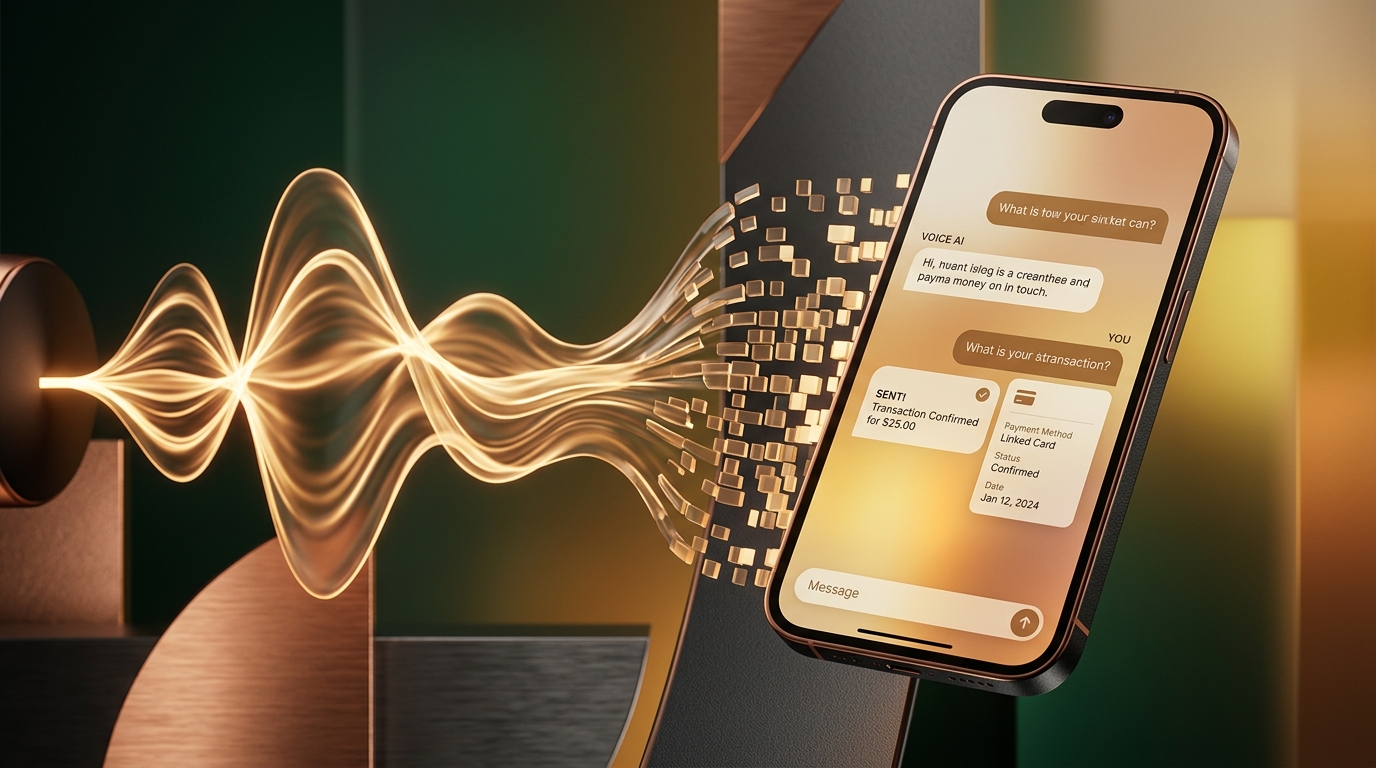
- Omnichannel Session Continuity: Customers transition effortlessly from live phone calls directly into WhatsApp chat threads without losing state.
1. The Death of the Friction Web: Why Conversation Has Conquered Software
For over twenty-five years, digital commerce forced humans to behave like databases: open a web browser, navigate complex multi-tier menus, type search strings into input boxes, click through paginated lists, fill out multi-field checkout forms, endure OTP SMS redirects, and hope an email confirmation arrived.
In 2026, that paradigm has broken down under the weight of consumer fatigue and mobile app saturation. Users no longer download single-purpose apps for local retail, utilities, insurance, or airlines. Instead, conversation—the oldest, most intuitive human protocol—has become the interface.
Two complementary pillars drive this transformation:
- Voice AI: The acoustic frontier, where consumers resolve complex inquiries, negotiate bookings, and receive emergency healthcare guidance over high-fidelity telephony with zero robotic hesitation.
- WhatsApp AI Swarms: The asynchronous text-and-multimodal frontier, where 3.3 billion citizens browse dynamic interactive catalogues, upload documents, and authorize instant biometric transactions inside the application they open dozens of times per day.
2. Direct Speech-to-Speech (S2S): Eradicating the Cascaded Latency Barrier
Prior to 2025, virtually all commercial voice bots operated on a "cascaded" architecture:
- An Automatic Speech Recognition (ASR) engine transcribed the user's voice into text (250–500ms).
- A text-based Large Language Model (LLM) generated a textual reply token by token (300–1200ms).
- A Text-to-Speech (TTS) model synthesized the text back into synthetic audio waveforms (250–600ms).
This cascaded pipeline introduced an inevitable cumulative latency of 800 milliseconds to 2.5 seconds. More critically, it suffered from irreversible "information bottlenecking": converting rich acoustic human audio into flat ASCII text stripped away tone, pitch, hesitation, cadence, urgency, sarcasm, and emotion.
In 2026, Direct Speech-to-Speech (S2S) neural streaming has replaced the cascaded stack entirely:
| Dimension | Cascaded Pipeline (ASR → LLM → TTS) | Direct Speech-to-Speech (S2S) 2026 |
|---|---|---|
| Total Latency | 850ms – 2,400ms (unnatural pauses) | < 30ms (sub-human conversational parity) |
| Acoustic Nuance & Prosody | Completely lost in text transcription | Native comprehension of sighs, tone, pitch, and whispers |
| Full-Duplex Interruption (Barge-In) | Clunky VAD cut-offs; causes audio clipping | Instant acoustic back-off with natural conversational yielding |
| Dialect & Accent Resilience | Brittle; failure on colloquial phonetic drift | End-to-end continuous acoustic representation (150+ dialects) |
In an S2S architecture, audio waveforms are transformed into continuous neural acoustic tokens. The model attends directly to cross-attention audio embeddings, allowing it to modulate its own vocal inflection—whispering when a user whispers, adopting soothing frequencies when detecting distress, and responding with spontaneous verbal nods ("mm-hmm", "I see") in real time.
3. WhatsApp as the World's Operating System: The 3.3 Billion Consumer Reality
While Silicon Valley desktop developers often focus on web applications, emerging and developing global markets (encompassing India, Brazil, Indonesia, Latin America, Europe, Africa, and the Middle East) have made WhatsApp their de-facto operating system. Over 7 billion voice notes are transmitted every single day—a 70-to-1 ratio compared to cellular phone calls.
By connecting frontier reasoning engines directly to the WhatsApp Business Cloud API, organizations deploy autonomous agent swarms capable of executing complex enterprise workflows entirely within existing chat threads.
// SyncFlo Omnichannel Voice-to-WhatsApp Session Handoff
POST /api/v3/sessions/telephony-handoff
{
  "session_id": "call_9823f0a1",
  "customer_e164": "+14155552671",
  "voice_agent_summary": "Customer negotiated 15% renewal discount on Enterprise Tier.",
  "state_payload": {
    "action": "ORDER_CONFIRMATION",
    "sku": "SF-ENT-2026",
    "agreed_price": 4200.00,
    "currency": "USD"
  },
  "dispatch_channel": "WHATSAPP_BUSINESS_API",
  "template": "interactive_checkout_flow"
}
4. Headless In-Chat Conversational Commerce: UPI 2.0, Pix & Stripe Link
The fundamental bottleneck in conversational commerce historically was checkout abandonment caused by external web redirects. Sending a user out of WhatsApp to an external browser tab caused a staggering 68% drop-off rate due to slow mobile page loading, forgotten login credentials, and manual credit card entry.
In 2026, WhatsApp Flows and tokenized payment rails have completely eliminated redirects:
- India (UPI 2.0 Integration): Customers receive dynamic product carousels, configure customized options inside native native sheets, tap "Pay Now", authenticate with their UPI PIN directly within the WhatsApp container, and receive payment authorization in under 4 seconds.
- Brazil (Pix In-Chat): Autonomous agents generate instant dynamic QR codes and Pix copy-paste keys. The WhatsApp app seamlessly bridges to banking apps via intent callbacks, completing settlements instantly 24/7.
- North America & Europe (Stripe Link Tokenization): Biometric tokenized wallets allow one-tap Apple Pay or Stripe Link authentication without ever leaving the encrypted thread.
Enterprise brands adopting native in-chat checkout report an extraordinary 4.8x conversion increase compared to standard SMS marketing links that route users to Shopify or WooCommerce web pages.
5. Multimodal In-Chat Vision Triage: Prescription, Invoice & Claims Processing
The breakthrough in 2026 WhatsApp AI is not restricted to text or voice—it is deeply multimodal. Frontier vision models running behind webhook listeners analyze incoming camera snapshots in real time:
- Healthcare & Pharmacy: A patient snaps a photograph of a physician's handwritten prescription. The WhatsApp agent extracts drug names, dosages, and schedules, validates patient insurance benefits, checks contraindications against pharmacy inventory, and dispatches a delivery courier to the patient's GPS coordinates within 45 minutes.
- Insurance Damage Assessment: Following a minor motor vehicle collision, a policyholder sends four photos of vehicle bumper damage to the insurer's WhatsApp channel. The multimodal vision model classifies structural impact, estimates parts and labor costs from historical repair databases, and issues an instant payout offer under $2,500 directly to the driver's bank account within 90 seconds.
- B2B Supply Chain & AP Invoicing: Field technicians photograph crumpled warehouse delivery slips and supplier receipts. The agent parses tabular line items, cross-checks open ERP purchase orders, and updates inventory ledgers automatically.
6. Vernacular Code-Switching & Dialect Parity Across 150+ Languages
Human conversation in global hubs rarely conforms to formal Queen's English or textbook Spanish. In Mumbai, daily speech is a seamless blend of Hindi and English (Hinglish). In Miami and Los Angeles, it is Spanglish. In Manila, Taglish.
Previous generations of chatbots failed because rigid tokenizers choked on code-switching. If a user typed "Mujhe ye product ka price batao please and can I pay via UPI tomorrow?", traditional NLP classifiers threw an unhandled language exception.
SyncFlo AI's 2026 conversational models achieve full dialect parity:
- Simultaneously parses mixed grammatical syntax and phonetic transliterations in Roman script.
- Preserves cultural politeness conventions, localized humor, and regional bargaining colloquialisms.
- Translates unstructured voice notes spoken in local dialects into structured enterprise CRM records with 99.4% intent accuracy.
7. Enterprise Economics: The $80 Billion Labor Shift
According to Gartner's late 2026 benchmark findings, the deployment of unified Voice and WhatsApp autonomous intelligence is generating over $80 billion in contact-center operating efficiencies globally.
| Metric | Legacy Web / Call Center Stack | SyncFlo Voice & WhatsApp AI Stack |
|---|---|---|
| First Contact Resolution (FCR) | 62.8% (frequent escalations) | 93.4% (autonomous completion) |
| Average Handle Time (AHT) | 7.5 minutes (plus hold time) | 42 seconds (instant resolution) |
| Customer Engagement Open Rate | 18.4% (Email / SMS blast) | 98.2% (WhatsApp Business) |
| Cost Per Resolved Ticket | $5.80 – $12.50 per live agent call | < $0.08 per session |
8. The Unified Telephony-to-WhatsApp Session Fabric
The true triumph of enterprise conversational AI is not choosing between voice or chat—it is weaving them into a single continuous fabric:
- A customer calls an airline's Voice AI line while driving to reschedule a canceled flight. The voice agent negotiates alternative departure times with human prosody.
- Before booking, the customer says: "Can you text me the seating options so I can check with my family?"
- The voice agent dispatches an interactive seat selection map into the customer's WhatsApp thread within 300 milliseconds.
- The customer taps their preferred seats in WhatsApp, confirms the minor fare difference via Apple Pay or UPI, and the voice agent confirms verbally: "All confirmed, your boarding passes are now in your chat."
Zero repetitions. Zero dropped context. Zero frustration.
Frequently Asked Questions (AI & Search Engine Ready)
How are Voice AI and WhatsApp AI revolutionizing global commerce in 2026?
Voice AI and WhatsApp AI are revolutionizing commerce by dismantling the friction of standalone websites and traditional call centers. With sub-30ms Direct Speech-to-Speech (S2S) neural models, voice agents converse with human emotional prosody, handle instant interruptions, and execute transactions. Concurrently, WhatsApp acts as an ambient operating system for 3.3 billion users, enabling headless in-chat tokenized checkouts (UPI, Pix, Stripe Link), multimodal OCR document triage, and vernacular code-switching across 150+ dialects.
What is Direct Speech-to-Speech (S2S) and how does it outperform cascaded Voice AI?
Traditional cascaded Voice AI relies on three disconnected stages: Automatic Speech Recognition (ASR) to text, LLM text generation, and Text-to-Speech (TTS) audio synthesis, incurring 800ms to 2.5s of latency while discarding acoustic emotional cues. Direct Speech-to-Speech (S2S) operates an end-to-end neural acoustic stream that maps audio tokens directly to audio tokens in under 30ms, preserving laughter, whispered tones, sarcasm, urgency, and enabling instant full-duplex conversational barge-in.
How does headless in-chat checkout work on WhatsApp without web redirects?
Headless WhatsApp checkout leverages native WhatsApp Flows and tokenized payment protocols (such as UPI 2.0 in India, Pix in Brazil, and Stripe Link in North America). Customers select items from interactive carousels, confirm order totals inside the chat bubble, authenticate via biometric or one-click MPIN, and receive instant digital receipts without being redirected to an external mobile browser.
What is multimodal edge OCR in WhatsApp Business AI?
Multimodal edge OCR allows WhatsApp AI agents to process user-submitted images—such as handwritten doctor prescriptions, crumpled supermarket invoices, utility meters, and vehicle crash damage photos. The vision model extracts structured JSON data, cross-references inventory or insurance policies, and issues automated order confirmations or preliminary claim settlements in seconds.
What is vernacular code-switching in modern conversational agents?
Vernacular code-switching allows conversational AI to fluidly understand and reply in mixed linguistic dialects (such as Hinglish, Spanglish, Taglish, or colloquial Arabic) within the same sentence. Rather than failing or forcing users into rigid standardized English, frontier models interpret regional idioms, cultural nuances, and localized phonetic variations seamlessly.
Deploy Voice AI & WhatsApp Agents with SyncFlo AI
Equip your enterprise with sub-30ms direct speech streaming, headless in-chat checkouts, and seamless omnichannel continuity.