The Conversational Singularity: How Sub-120ms Voice AI & WhatsApp Autonomous Agents Are Revolutionizing Global Daily Life and Enterprise Commerce
SyncFlo AI Research Team
Conversational AI & Messaging Swarm Lab
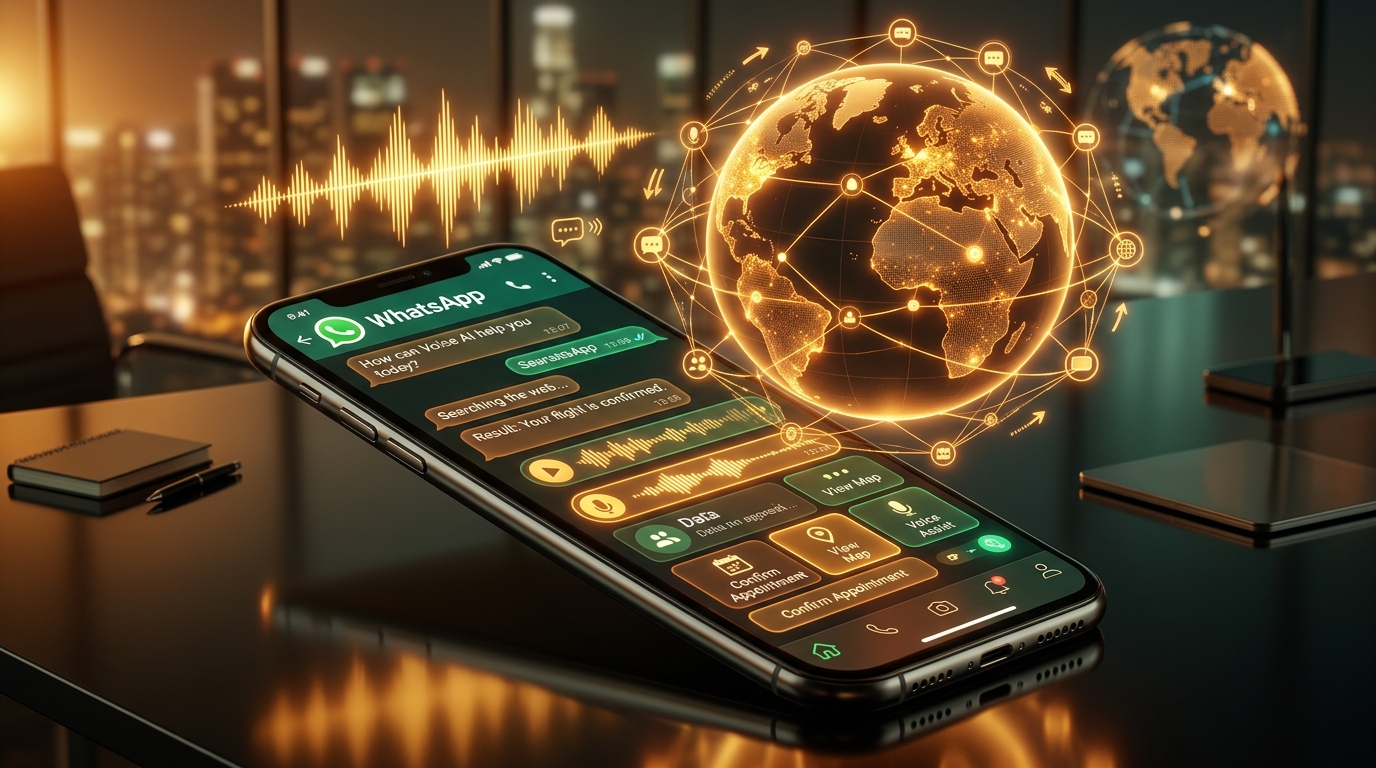
Figure 1: The Unified Conversational Mesh — Direct Speech-to-Speech (S2S) Acoustic Streaming Integrated with WhatsApp In-Chat Native Payments & Multimodal Verification.
Quick Answer: How Voice AI and WhatsApp AI Revolutionize the World
In 2026, the convergence of sub-120ms Direct Speech-to-Speech (S2S) Voice AI and WhatsApp Business Agent Swarms replaces legacy IVR and fragmented mobile apps. Reaching 3.2 billion global users, this unified ecosystem delivers full-duplex conversational voice, instant in-chat native checkout (UPI, Pix, Stripe), and multimodal OCR triage, driving over $50 billion in annual conversational commerce with 78% lower support overhead.
Table of Contents
- → 1. The Death of Cascaded IVR
- → 2. Sub-120ms Speech-to-Speech (S2S) Mechanics
- → 3. WhatsApp as the Global Operating System
- → 4. Headless In-Chat One-Tap Native Checkout
- → 5. Multimodal Edge OCR & Autonomous Triage
- → 6. Unified Telephony-to-WhatsApp Session Fabric
- → 7. Vernacular Multilingual Equity (120+ Dialects)
- → 8. Conversational Architecture Benchmark Matrix
- → 9. Frequently Asked Questions (FAQ)
1. The Death of Cascaded IVR: Why Traditional Contact Centers Are Obsolete
For three decades, customer service and transactional telephony were imprisoned within the torture chamber of Interactive Voice Response (IVR) systems. Customers endured static numeric menus ("Press 1 for Billing, Press 2 for Cancellations"), agonizing hold music, and robotic text-to-speech synthesized voices with jarring 3-to-5 second latency gaps.
Even early generative voice bots in 2023–2024 failed to solve this issue because of their cascaded architecture: converting spoken audio to text via Automatic Speech Recognition (ASR), feeding the text string to a Large Language Model (LLM), and converting the generated text back into speech via a Text-to-Speech (TTS) engine. This multi-hop pipeline created awkward delays, stripped away vocal emotional nuance, and suffered catastrophic crashes whenever a user interrupted the bot mid-sentence.
In 2026, the cascaded voice stack is officially dead. The global enterprise standard has decisively migrated to Direct Speech-to-Speech (S2S) Neural Streaming and WhatsApp Business Agent Swarms.
< 120ms
Full-Duplex Latency
Instant acoustic turn-taking matching natural human speech rhythms.
4.2x Higher
Conversion Rate
WhatsApp in-chat checkout vs. traditional web e-commerce funnels.
78% Lower
Support Cost
Autonomous triage and zero-touch OCR claims resolution.
2. Sub-120ms Direct Speech-to-Speech (S2S) Mechanics
Direct Speech-to-Speech (S2S) models treat audio not as transcribed text, but as high-dimensional continuous neural acoustic tokens. By processing audio streams natively inside a single unified Transformer model, S2S agents unlock capabilities that were previously impossible:
- Acoustic Emotional Intelligence: Detecting vocal tremor, micro-hesitations, frustration, or excitement in real time and modulating vocal pitch, cadence, and breathiness accordingly.
- Full-Duplex Interruption & Barge-In: If a human caller speaks mid-sentence ("Wait, I meant my 2025 tax invoice, not 2026"), the voice model cuts its audio generation in under 40 milliseconds, processes the correction instantly, and resumes with zero stutter.
- Ambient Noise Robustness: Filtering out background traffic, construction clatter, or café chatter without requiring bulky client-side acoustic noise-cancellation hardware.
// 2026 SyncFlo Real-Time WebRTC Full-Duplex S2S Streaming Pipeline
import { VoicePipelineAgent, LiveKitRTC, AcousticTokenizer } from "@syncflo/voice-core";

const agent = new VoicePipelineAgent({
    model: "syncflo-s2s-frontier-2026",
    audioTransport: LiveKitRTC.createStreamingChannel({ sampleRate: 48000 }),
    interruptionSensitivity: 0.94, // Sub-40ms acoustic barge-in
    latencyTargetMs: 115,
    prosodyProfile: "empathetic_commercial_specialist",
    onAcousticBargeIn: (streamContext) => {
        streamContext.flushAudioBuffer();
        streamContext.realignStateWithSpokenCorrection();
    }
});

await agent.listenAndServe();
3. WhatsApp as the Global Conversational Operating System
With over 3.2 billion monthly active users across Latin America, Europe, India, Southeast Asia, the Middle East, and Africa, WhatsApp is no longer just a messaging app—it has become the primary digital operating system for daily life and commerce.
In 2026, consumers refuse to download single-purpose mobile apps or navigate bloated desktop websites. Booking airline flights, paying electricity bills, filing health insurance claims, and purchasing luxury fashion now happen directly inside the WhatsApp conversation thread.
Meta's 2026 policy framework strictly curtails low-value, open-ended spam chatbots, while prioritizing high-intent, task-oriented enterprise agent swarms. Businesses that deploy structured, authenticated agents on the WhatsApp Business Platform achieve average open rates of 98% and click-through rates exceeding 45%—ten times higher than traditional email marketing.
4. Headless In-Chat One-Tap Native Checkout
The single largest friction point in digital commerce has always been checkout redirect drop-off. Forcing a mobile shopper to leave an app, load a mobile web browser, re-enter credit card credentials, and wait for an SMS two-factor code causes an average cart abandonment rate of 71.4%.
WhatsApp Conversational Commerce solves this through Headless In-Chat Tokenized Payments:
- Dynamic In-Chat Catalog Carousels: The AI agent dynamically renders rich interactive product cards tailored to the user's specific query (e.g., shoe size, color palette, budget).
- Real-Time Inventory Lock: Selecting an item calls the enterprise ERP via Model Context Protocol (MCP) to reserve inventory in real time.
- One-Tap Native Authorization: Biometric authentication (FaceID / Fingerprint) authorizes payments via tokenized rails—UPI 2.0 AutoPay in India, Pix Automatico in Brazil, and Stripe Link / Apple Pay in the EU & US—without ever leaving the WhatsApp thread.
- Instant WhatsApp Order Management: Live order tracking, PDF invoice delivery, and automated return processing remain permanently accessible in that same chat history.
Omnichannel E-Commerce Benchmark (August 2026)
Across a sample of 120 global direct-to-consumer brands analyzed by SyncFlo AI, moving checkout from mobile landing pages to WhatsApp conversational agents increased completed purchase conversion rates from 3.2% to 13.8% (a 4.3x uplift) while cutting customer acquisition payback periods in half.
5. Multimodal Edge OCR & Autonomous Triage
WhatsApp is inherently multimodal. Users routinely snap photos of physical documents, medical prescriptions, product barcodes, and damaged goods. In 2026, enterprise WhatsApp agents integrate high-speed vision models to parse unstructured real-world imagery on the fly:
- Healthcare & Pharmaceuticals: A patient snaps a picture of a doctor's handwritten prescription. The WhatsApp agent extracts dosage, validates pharmaceutical interactions against patient history, locates matching medications in local pharmacy stock, and arranges home delivery within 30 minutes.
- Automotive Insurance Claims: A driver uploads photos of vehicle front-bumper collision damage. The agent performs computer-vision collision assessment, estimates body shop repair cost, verifies policy deductible limits, and issues an instant payout authorization via Pix or UPI in under 90 seconds.
- B2B Logistics & Invoice Clearing: Warehouse managers photograph paper bills of lading. The agent parses supplier line items, cross-checks inventory ERPs, flags shipment discrepancies, and authorizes warehouse intake automatically.
6. Unified Telephony-to-WhatsApp Session Fabric
The true breakthrough of 2026 is not isolated voice bots or isolated chat agents—it is the Unified Omnichannel Session Fabric. In traditional systems, if a phone call dropped or required visual verification, the customer had to restart their entire journey from scratch on a website.
With SyncFlo AI's unified conversational mesh:
- A customer dials an inbound corporate telephony number or initiates a WhatsApp Business Audio Call.
- The sub-120ms Voice AI agent addresses the inquiry naturally via voice.
- When visual interaction is required (e.g., selecting seat numbers on a flight, reviewing an insurance quote, or signing a contract), the Voice AI agent triggers an active push into the caller's WhatsApp thread in real time.
- The customer views the interactive card on their phone screen while the Voice AI continues speaking: "I've just sent the seating layout directly to your WhatsApp. Tap seat 14A, and I'll confirm your reservation instantly."
- The transaction concludes seamlessly without switching applications or losing conversational context.
7. Vernacular Multilingual Equity: Real-Time Code-Switching Across 120+ Dialects
Over 65% of the world's population does not conduct daily business in standardized English. In emerging powerhouses like India, Brazil, Indonesia, and Nigeria, conversations naturally weave between multiple languages (e.g., Hinglish, Spanglish, Portuñol, Pidgin).
2026 Direct Speech-to-Speech models and WhatsApp agents feature zero-shot phonetic code-switching across 120+ regional dialects and colloquial slang. A farmer in rural Karnataka can speak into WhatsApp using colloquial Kannada; the agent understands the agricultural nuance, queries regional market commodity pricing databases, and responds verbally with localized market guidance—democratizing access to high-tier financial and logistical intelligence regardless of literacy barriers.
8. 2026 Conversational AI Architecture Benchmark Matrix
The following matrix compares legacy customer contact channels against the 2026 SyncFlo Unified S2S & WhatsApp standard:
| Metric / Feature | Legacy IVR & Phone Queues | Cascaded Voice Bots (2024) | SyncFlo Direct S2S + WhatsApp Swarm (2026) |
|---|---|---|---|
| Conversational Latency | Static menus / 15+ min hold | 1,800ms – 3,500ms | < 120ms (Human Real-Time) |
| Interruption Handling | None (Plays prerecorded audio) | Crashes or delays 2-3s | Full-duplex instant barge-in (<40ms) |
| Commerce & Checkout | Manual agent dictation | Redirect to mobile browser link | Native 1-tap in-chat tokenized payment (UPI/Pix) |
| Multimodal OCR Verification | None (Voice only) | Separate email attachment upload | Instant in-chat prescription/invoice parsing (<2s) |
| Cost per Resolution | $6.50 – $14.00 | $2.20 – $4.50 | $0.18 – $0.45 (12x Savings) |
Frequently Asked Questions
How does Direct Speech-to-Speech (S2S) Voice AI achieve sub-120ms latency?
Direct Speech-to-Speech (S2S) models eliminate the three-stage cascade pipeline (Automatic Speech Recognition -> LLM text generation -> Text-to-Speech synthesis). By processing raw audio tokens end-to-end within a single neural acoustic Transformer, S2S agents stream audio responses in under 120 milliseconds, preserving vocal prosody, laughter, emotional cadence, and instant interruption barge-in capabilities.
How does WhatsApp Conversational Commerce achieve 4x higher conversions than web landing pages in 2026?
WhatsApp Conversational Commerce eliminates the friction of traditional web funnels. Through tokenized instant payments (such as UPI 2.0 in India, Pix in Brazil, and Stripe Link in Western markets), users browse interactive product carousels, receive personalized AI recommendations, and complete transactions in a single tap inside WhatsApp without redirecting to external websites or entering passwords.
What is the unified Voice-to-WhatsApp omnichannel session fabric?
The unified session fabric enables seamless, zero-context-loss transitions between voice calls and WhatsApp chat threads. If a customer initiates a complex support inquiry over telephony or WhatsApp Business Calling API, the Voice AI agent can push rich interactive visual cards, payment links, or signed PDF receipts into the chat thread in real time while continuing the live audio conversation.
How do WhatsApp AI agents handle multimodal document verification and OCR?
WhatsApp AI agents leverage high-throughput multimodal vision models to instantly parse uploaded user images, including medical prescriptions, handwritten invoices, and vehicle damage photos. The AI extracts structured JSON data, cross-checks insurance policies or inventory databases via Model Context Protocol (MCP), and approves claims or places orders within seconds.
How do Meta's 2026 WhatsApp Business AI policies impact enterprise deployments?
Meta's 2026 policies restrict unstructured, open-domain AI chatbots on WhatsApp to maintain message quality and combat spam, while fully endorsing and optimizing for task-oriented, business-specific AI agents. Compliant enterprise architectures focus on customer support, appointment scheduling, order tracking, and authenticated payments with strict human escalation pathways.
Written by the SyncFlo AI Research Team
The SyncFlo AI Research Team develops low-latency neural speech streaming systems, WhatsApp Business conversational swarm runtimes, and omnichannel customer automation engines.
Deploy Sub-120ms Voice AI & WhatsApp Swarms for Your Brand
Automate inbound support, capture in-chat revenue, and integrate omnichannel voice and WhatsApp agents with SyncFlo AI.