The Conversational Ubiquity Revolution: How Voice AI & WhatsApp AI Agents Are Redefining Global Commerce in 2026
How sub-200ms direct speech-to-speech audio models, 3.2 billion WhatsApp users, and autonomous CRM orchestration are dismantling obsolete IVR trees and transforming modern enterprise revenue operations.
Key Takeaways & Core Metrics (2026)
- Direct Speech-to-Speech (S2S): Modern voice agents achieve 160ms–250ms end-to-end latency, allowing callers to interrupt, joke, and speak naturally with full prosodic nuance.
- WhatsApp Conversational Powerhouse: With 3.2B+ global active users and 98% open rates, WhatsApp AI agents drive over $45 billion in direct conversational commerce in 2026.
- Autonomous Tier-1 Resolution: Conversational AI agents autonomously resolve 40%–60% of inbound sales qualification and support tickets with zero human intervention.
- Omnichannel Continuity with SyncFlo: Real-time telephony voice calls seamlessly generate structured WhatsApp follow-up summaries, payment links, and instant CRM ticket logging.
For decades, the standard customer service journey was defined by friction: navigating agonizing phone trees ("Press 1 for Sales, Press 2 for Support"), repeating account information to three different representatives, or wrestling with rigid website chatbots that could only say, "I didn't quite catch that."
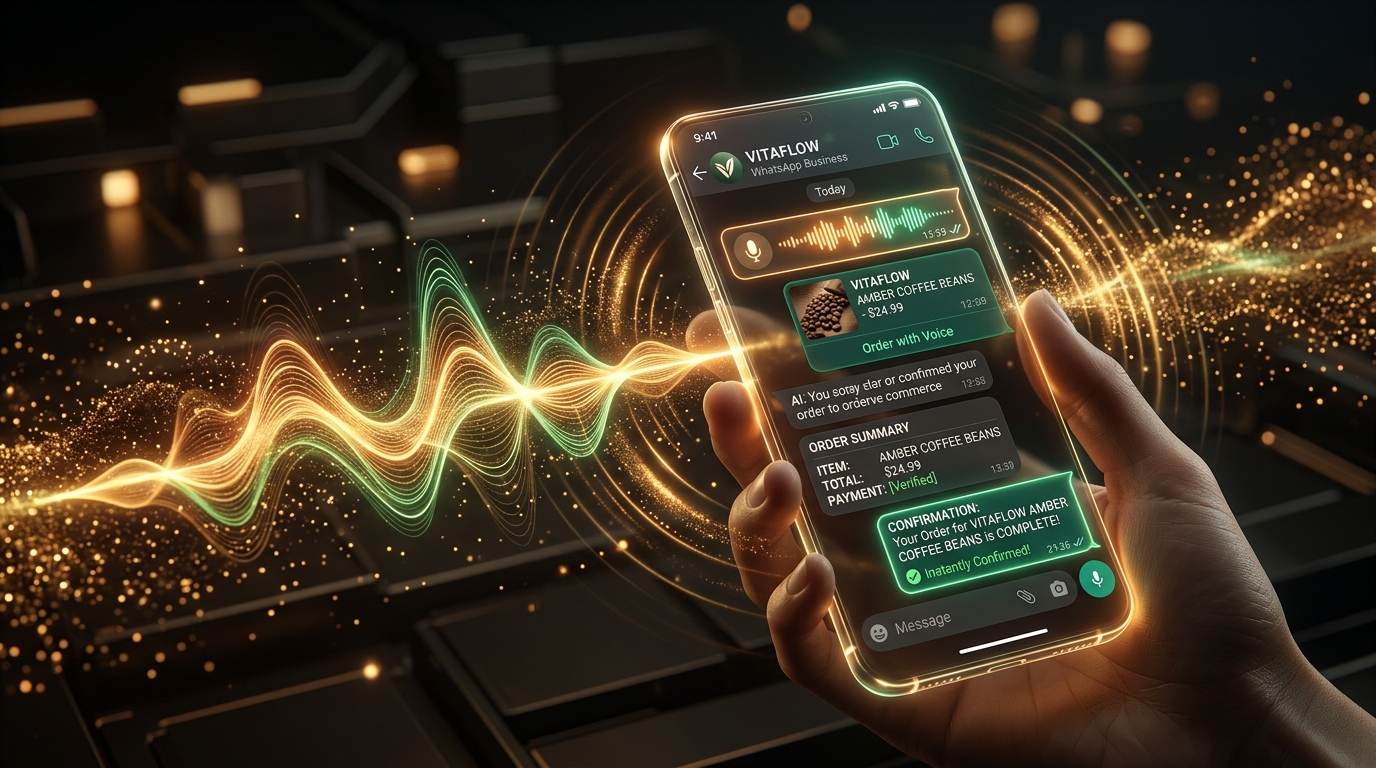
In 2026, that era is definitively over. The convergence of direct speech-to-speech (S2S) voice models and autonomous WhatsApp AI agents has catalyzed the largest shift in consumer interaction since the smartphone. Today, customers converse naturally with voice agents that listen, think, and reply with sub-second human cadence, while receiving rich interactive confirmations and executing transactions inside WhatsApp.
1. The Death of the Clunky IVR & Scripted Chatbot
Traditional customer engagement channels suffer from massive abandonment. Telephony IVRs experience an estimated 60%+ hang-up rate before reaching a human, and email marketing open rates hover near 20%. By contrast, WhatsApp business messages achieve a ~98% open rate and an 80%+ response rate within 15 minutes.
Natural turn-taking with direct speech tokenization, eliminating robotic lag.
Over 1 billion commercial transactions processed weekly worldwide in 2026.
Annual global transaction volume executed inside conversational AI channels.
2. Speech-to-Speech Architecture: How Voice AI Achieved <200ms Latency
The breakthrough that made Voice AI feel indistinguishable from human conversation in 2026 is the abandonment of the legacy 3-stage cascade:
❌ Legacy Cascaded Pipeline (Total Latency: 1,500ms – 3,200ms):
Audio In → [STT Transcribe: 300ms] → [Text LLM Inference: 800ms] → [TTS Audio Synthesis: 400ms] → Audio Out
✅ Modern SyncFlo Native Speech-to-Speech (Total Latency: 160ms – 250ms):
Raw Audio Stream → [Direct Neural Audio-to-Audio Model with Dynamic Tool Call Interceptors] → Real-Time Audio Stream Out
Direct speech-to-speech architectures operate on continuous audio embeddings. This eliminates transcription inaccuracies, preserves vocal cadence, detects caller hesitation or frustration, and allows callers to naturally interrupt the AI without breaking the conversation state.
"When voice response latency drops below 250 milliseconds, the human brain stops perceiving the interaction as an artificial machine exchange and begins engaging with full conversational flow."
3. WhatsApp AI Agents: The Global Commerce Operating System
While voice handles high-urgency, complex inquiries, WhatsApp serves as the universal persistent interface. In 2026, WhatsApp AI Agents are not merely text responders—they are full autonomous executors equipped with multimodal vision and transactional tool capabilities:
- Multimodal Image & Invoice OCR: A customer sends a photo of a broken part or an insurance claim; the agent parses serial numbers, verifies warranty status in the database, and initiates a replacement in seconds.
- In-Chat Instant Checkout: Integrating native WhatsApp Payment APIs and Stripe links to convert high-intent prospects directly inside the thread without redirecting to external landing pages.
- Proactive Event-Driven Notifications: Automated flight delay re-bookings, prescription refill reminders, and delivery confirmations with interactive action buttons.
4. High-Impact Enterprise Use Cases Across Industries
A. Real Estate & High-Ticket B2B Lead Qualification
When an inbound lead calls a property listing or submits a form, SyncFlo's Voice AI calls back within 15 seconds, qualifies budget and timeline parameters, answers neighborhood and zoning questions, and immediately sends a WhatsApp confirmation containing a calendar invite and video tour links.
B. Healthcare Patient Intake & Appointment Management
Clinics deploy Voice AI to manage after-hours intake, rescheduling, and insurance pre-verification. The agent checks EHR availability, books the appointment slot, and delivers HIPAA-compliant pre-visit preparation checklists directly to the patient's WhatsApp.
C. E-Commerce Post-Purchase & Returns Orchestration
Customers initiate returns by texting a photo of the product over WhatsApp. The agent analyzes the damage, references return policy logic, issues a prepaid return label PDF, and updates Shopify or Magento inventory in real time, resolving disputes with zero human agent escalation.
5. Comparative Breakdown: Legacy vs SyncFlo Omnichannel
| Feature / Metric | Legacy IVR & Rule Chatbots | SyncFlo Voice & WhatsApp AI (2026) |
|---|---|---|
| Voice Response Latency | 1,500ms – 3,500ms (Unnatural pauses) | 160ms – 250ms (Human-speed conversational flow) |
| Conversational Interruptions | Crashes or forces user to listen to full script | Full duplex interruption & real-time re-planning |
| Cross-Channel Context | Siloed; caller repeats info across channels | Unified memory: Phone call context syncs to WhatsApp |
| Tier-1 Resolution Rate | 10% – 18% (Most queries escalated) | 40% – 60% autonomous end-to-end resolution |
| Transactional Capability | Informational only; links out to browser | Executes payments, bookings & DB writes directly |
6. Step-by-Step Blueprint to Deploy Voice + WhatsApp AI
Organizations can roll out an enterprise-ready conversational AI stack in four straightforward phases:
- Step 1: Connect Enterprise Knowledge & Tool Registries: Ingest FAQs, product catalogues, and CRM APIs into SyncFlo's secure orchestration engine with role-based data permissions.
- Step 2: Calibrate Voice Latency & Conversational Persona: Configure low-latency speech-to-speech audio models, selecting custom brand voices and setting turn-taking silence detection to <250ms.
- Step 3: Provision WhatsApp Cloud Business Webhooks: Integrate official verified WhatsApp Business Numbers, establishing rich interactive button templates and product catalog catalogs.
- Step 4: Establish Safety Guardrails & Human Escalation: Implement real-time sentiment analysis that automatically transfers frustrated callers or high-value enterprise accounts to live senior representatives with full chat transcripts.
Revolutionize Your Customer Engagement
Deploy ultra-low latency Voice AI and automated WhatsApp agents with SyncFlo AI today.
Frequently Asked Questions (FAQ)
How does speech-to-speech Voice AI differ from legacy voice bots?
Direct speech-to-speech (S2S) models process raw audio tokens natively in 160-250ms, eliminating the 1.5-3.0s latency of cascaded Speech-to-Text (STT) + LLM + Text-to-Speech (TTS) pipelines while preserving emotional tone, prosody, and conversational interruptions.
Why is WhatsApp the dominant platform for conversational AI in 2026?
WhatsApp reaches over 3.2 billion monthly active users with an industry-leading ~98% message open rate. In 2026, autonomous WhatsApp AI agents process catalog lookups, payments, multimodal image/invoice OCR, and order changes natively inside the chat window.
How does SyncFlo AI unify Voice AI and WhatsApp agents?
SyncFlo AI acts as the centralized omnichannel orchestration brain. If a customer calls your Voice AI agent, the conversation context, audio transcript, and follow-up action items automatically sync directly into a WhatsApp confirmation thread and your enterprise CRM in real time.