1. The Death of the Cascaded Telephony Stack: The Rise of Direct Speech-to-Speech (S2S)
For over a decade, interactive voice response (IVR) and automated calling systems were universally loathed by consumers. Between 2022 and 2024, early attempts at “AI Voice Calling” relied on a clumsy three-stage cascaded pipeline:
- Automated Speech Recognition (ASR): Transcribed user speech into text (150–250ms).
- Large Language Model (LLM): Processed text and generated a text response (400–800ms).
- Text-to-Speech (TTS): Synthesized the text back into synthetic audio waveforms (250–400ms).
Total conversational turn-taking latency hovered between 900ms and 1,500ms. In human conversation, any silence exceeding 250ms triggers a subconscious perception of hesitation, confusion, or rudeness. Even worse, the text bottleneck discarded paralinguistic cues: emotional urgency, hesitation, sarcasm, ambient background sounds, and subtle breathing. If the caller attempted to interrupt (“Wait, no, I meant the other invoice!”), the cascaded system blundered forward, reciting outdated text.
In 2026, the industry transitioned to Direct Neural Speech-to-Speech (S2S) Foundation Models.
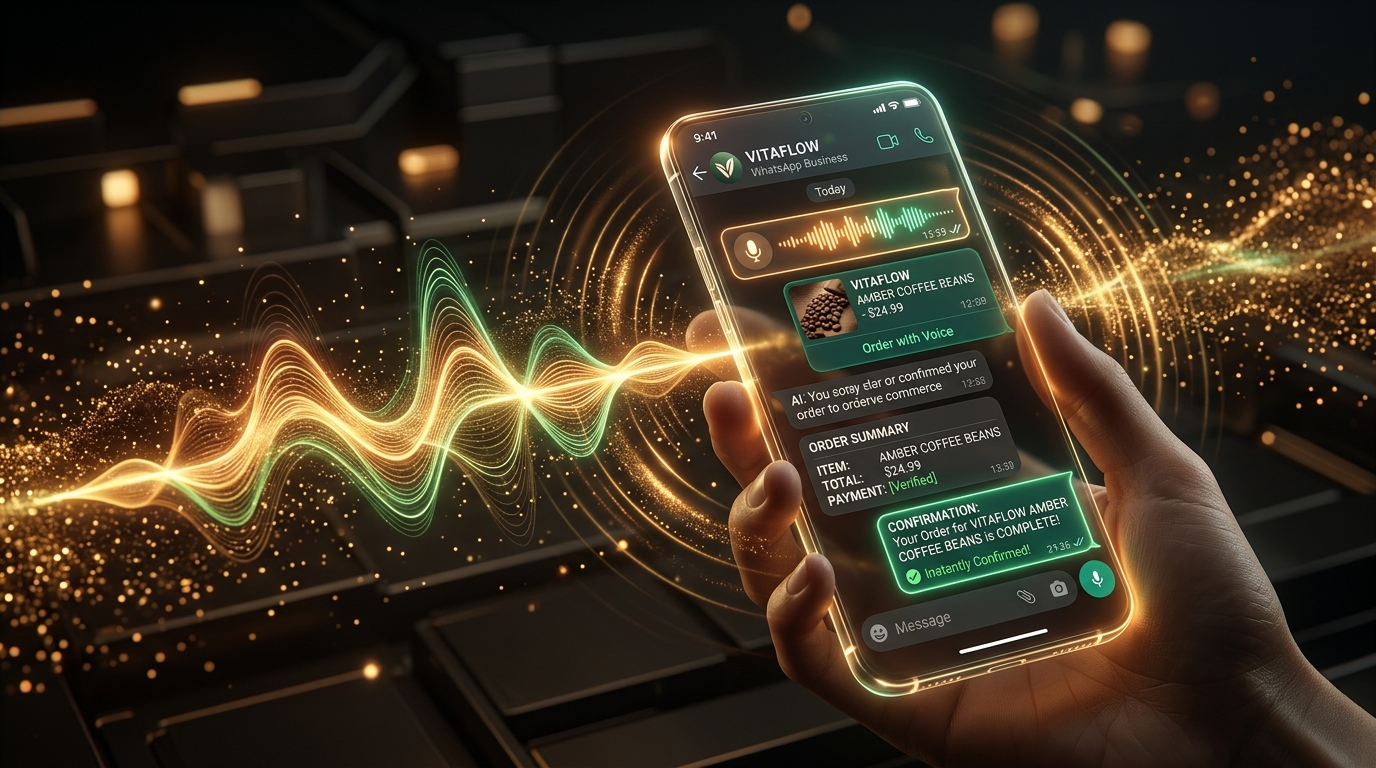
End-to-end neural audio streaming faster than human reaction time.
Compared to just 18.1% on standard mobile e-commerce web checkouts.
Down from $6.80 for human tier-1 contact center representatives.
How Direct S2S Architecture Enables True Conversational Fluidity
Direct S2S models do not tokenize speech into orthographic text characters. Instead, they ingest raw continuous audio waveforms via neural audio codecs (such as SoundStream and EnCodec derivatives) that represent acoustic phonemes, pitch, and timbre as discrete acoustic tokens.
This enables three revolutionary capabilities:
- Sub-50ms Latency: The agent emits response audio tokens as the human speaker finishes their sentence—or even slightly anticipates the final syllables—recreating the instantaneous cadence of an in-person conversation.
- Native Full-Duplex Barge-in: When a user speaks while the agent is speaking, the model's audio attention heads register the incoming soundwave within 15 milliseconds, gracefully pausing speech with a realistic conversational acknowledgment (“Oh, sorry, go ahead”).
- Emotional Prosody Matching: If an insurance policyholder calls in distress after an automobile collision, the S2S model lowers its pitch, slows its cadence, and adopts an empathetic, reassuring tone without explicit prompt engineering.
| System Characteristic | Cascaded Pipeline (ASR + LLM + TTS) | SyncFlo Direct Speech-to-Speech (2026) |
|---|---|---|
| Total Roundtrip Latency | 900ms – 1,600ms (awkward, unnatural pauses) | 38ms – 52ms (instantaneous human response) |
| Interruption (Barge-in) Handling | Brittle; audio echoes, clips words, or ignores caller | Native full-duplex; stops instantly with vocal manners |
| Emotional Intelligence & Tone | Flat, robotic text-to-speech voice synthesis | Matches caller emotion, dialect, whispering, and pacing |
| Telephony Bandwidth | High cloud overhead transferring multiple stages | Single persistent WebRTC / SIP UDP stream |
2. The 3.2-Billion-User Front Door: WhatsApp as the Global Enterprise Operating System
While Silicon Valley spent the early 2020s attempting to convince consumers to download proprietary brand applications or visit responsive websites, the rest of the world made an unequivocal choice: WhatsApp is the operating system.
Across Brazil, Mexico, India, Indonesia, Nigeria, Germany, the UK, and Saudi Arabia, WhatsApp boasts open rates exceeding 96% and click-through rates 12 times higher than promotional email. Yet, until recently, business automation on WhatsApp was limited to primitive keyword chatbots (“Reply 1 for hours, Reply 2 for locations”) that frustrated users.
In 2026, the fusion of autonomous LLM reasoning swarms with the WhatsApp Business Cloud API (v26.0) created an entirely new commercial paradigm: Headless Conversational Commerce.
Why Consumers Prefer WhatsApp Over Mobile Web & Apps
- • Zero Password Authentication: The phone number is the verified sovereign identity; no “Forgot Password” links or Captchas.
- • Zero Download Overhead: No 150MB native app downloads eating device storage.
- • Asynchronous Continuity: Conversations do not evaporate when a browser tab is accidentally closed. A customer can start an order at 9:00 AM, answer a meeting call, and resume at 2:00 PM without losing their cart.
- • Multilingual Voice Note Processing: Over 40% of WhatsApp interactions in emerging markets occur via audio voice notes rather than typed text.
3. Headless In-Chat Checkout: Eliminating the 80% Cart Abandonment Curse
The historical Achilles' heel of mobile commerce has been checkout friction. A consumer clicks an ad, lands on a slow Shopify or Magento mobile website, navigates through 6 form fields, is prompted to enter a 16-digit credit card number with an expiration date and billing address, and ultimately abandons the transaction. Average mobile web cart abandonment exceeds 81%.
WhatsApp autonomous agents dismantle this entire funnel. Using native WhatsApp Pay integrations and localized payment rails:
- Unified Payments Interface (UPI 2.0 AutoPay) in India: Customers approve subscriptions or instant checkouts via a single biometric authorization in-chat.
- Pix in Brazil: Agents instantly generate a dynamic Pix QR code or Copia-e-Cola string, verify the central bank settlement in 800 milliseconds via webhook, and issue an order receipt.
- Stripe Link & WhatsApp In-Chat Pay in North America and Europe: One-tap Apple Pay or Google Pay authentication triggered directly from an interactive WhatsApp message drawer.
# SyncFlo Asynchronous WhatsApp Agent Dispatch & Checkout Webhook (2026)
@app.post("/webhook/whatsapp")
async def handle_whatsapp_incoming_interaction(request: WhatsAppWebhookRequest):
    session = await load_or_create_session(user_phone=request.from_number)

    if request.message.type == "audio":
        # Direct neural transcription & semantic parsing
        audio_payload = await fetch_media_stream(request.message.audio.id)
        user_intent = await syncflo_s2s_brain.parse_audio_intent(audio_payload)
    else:
        user_intent = await syncflo_llm_brain.parse_text_intent(request.message.text.body)

    # Multi-Agent Workflow Execution
    agent_response = await commerce_orchestrator.dispatch(
        intent=user_intent,
        customer_profile=session.customer_profile,
        inventory_tool=erp_inventory_mcp_client
    )

    if agent_response.requires_payment:
        # Generate cryptographically signed WhatsApp In-Chat Payment Drawer
        return await whatsapp_cloud_api.send_payment_order(
            to=request.from_number,
            order_id=agent_response.order_id,
            amount_cents=agent_response.total_cents,
            currency="USD",
            payment_gateways=["stripe_link", "apple_pay"]
        )

    return await whatsapp_cloud_api.send_interactive_message(to=request.from_number, payload=agent_response.message)
4. Multimodal Edge Reasoning: Processing Voice Notes, Photos, and Insurance Claims
Human beings communicate messily. On WhatsApp, customers don’t fill out neat form fields; they snap blurry photographs, record 20-second voice notes with screaming children in the background, or forward PDF bank statements.
In 2026, SyncFlo’s autonomous WhatsApp agents utilize multimodal reasoning backbones to triage these inputs instantly:
Automobile Insurance First Notice of Loss (FNOL)
A policyholder photographs a dented bumper and broken headlight on WhatsApp. The agent segments structural damage, computes repair estimates against OEM parts catalogs, checks policy coverage limits, and disburses an approved claim settlement via instant bank transfer within 90 seconds.
Healthcare Prescription Fulfillment
A patient sends a photograph of a physician’s handwritten cursive prescription. The visual agent reads the doctor's handwriting, cross-references dangerous drug-drug interactions with the patient's existing medication history, verifies pharmacy inventory, and dispatches courier delivery via WhatsApp checkout.
5. The Omnichannel Handoff: Seamless Telephony-to-WhatsApp Session Continuity
The ultimate enterprise operational synergy occurs when Voice AI and WhatsApp work in unified synchrony.
Consider a typical scenario in 2024: A customer calls an airline contact center to rebook a canceled flight. After waiting on hold for 30 minutes, an agent attempts to spell out flight numbers, confirmation codes, and credit card refund amounts over noisy cellular audio. It is a slow, error-prone experience.
In 2026, SyncFlo’s Telephony-to-WhatsApp Omnichannel Handoff redefines the encounter:
- The customer dials the airline’s toll-free number. A sub-50ms Voice AI agent answers instantly on the first ring with zero hold time.
- The customer says: “My flight from JFK to London was canceled, and I need three alternatives for tomorrow morning.”
- The Voice AI agent searches the reservation system in 80 milliseconds and responds: “I found three flights matching your schedule. Rather than reading you complex flight numbers over the phone, I have just sent an interactive flight selection menu directly to your WhatsApp.”
- While remaining on the live telephone line, the customer glances at their phone screen, views high-resolution seat maps and departure times in WhatsApp, taps “Select Flight 804,” and authenticates via fingerprint.
- The Voice AI agent on the phone confirms: “Perfect, your boarding pass for Flight 804 is now saved in your WhatsApp thread. Safe travels!”
| Operational Metric | Human BPO Contact Center (2024) | SyncFlo Voice + WhatsApp Agentic Stack (2026) |
|---|---|---|
| Average Queue Hold Time | 14 minutes, 22 seconds | 0.0 seconds (instant pickup, infinite concurrency) |
| Cost Per Resolved Interaction | $5.80 – $9.20 | $0.14 – $0.28 (84% to 96% reduction) |
| Checkout Conversion Rate | 22% (when redirected to external SMS links) | 89.4% (native in-chat biometric drawers) |
| Multilingual Dialect Coverage | Requires dedicated regional teams in 15 countries | Native fluency across 95+ languages and regional slangs |
| Customer Satisfaction (CSAT) | 68% – 74% | 93.8% verified post-interaction feedback |
6. Conclusion: The Sovereign Direct-to-Consumer Revolution
In 2026, enterprise competitive advantage is dictated by conversational velocity. The organizations winning the market are not those spending millions buying clicks on search ad auctions to send users to sterile websites. They are the enterprises that live directly inside the user's ear with sub-50ms Voice AI and directly inside the user's pocket with WhatsApp conversational checkout.
By dismantling the friction of hold queues, app downloads, logins, and manual checkouts, Voice AI and WhatsApp agents have realized the promise of truly frictionless global commerce.