1. The Disappearance of the Interface: Ambient Conversational Supremacy
For over three decades, human interaction with computing required learning the machine's grammar. Users clicked through hierarchical web directories, downloaded dozens of redundant mobile applications, typed intricate passwords, and navigated tedious checkout forms. This paradigm concentrated digital commerce in tech-savvy, literate populations while imposing friction even on power users.
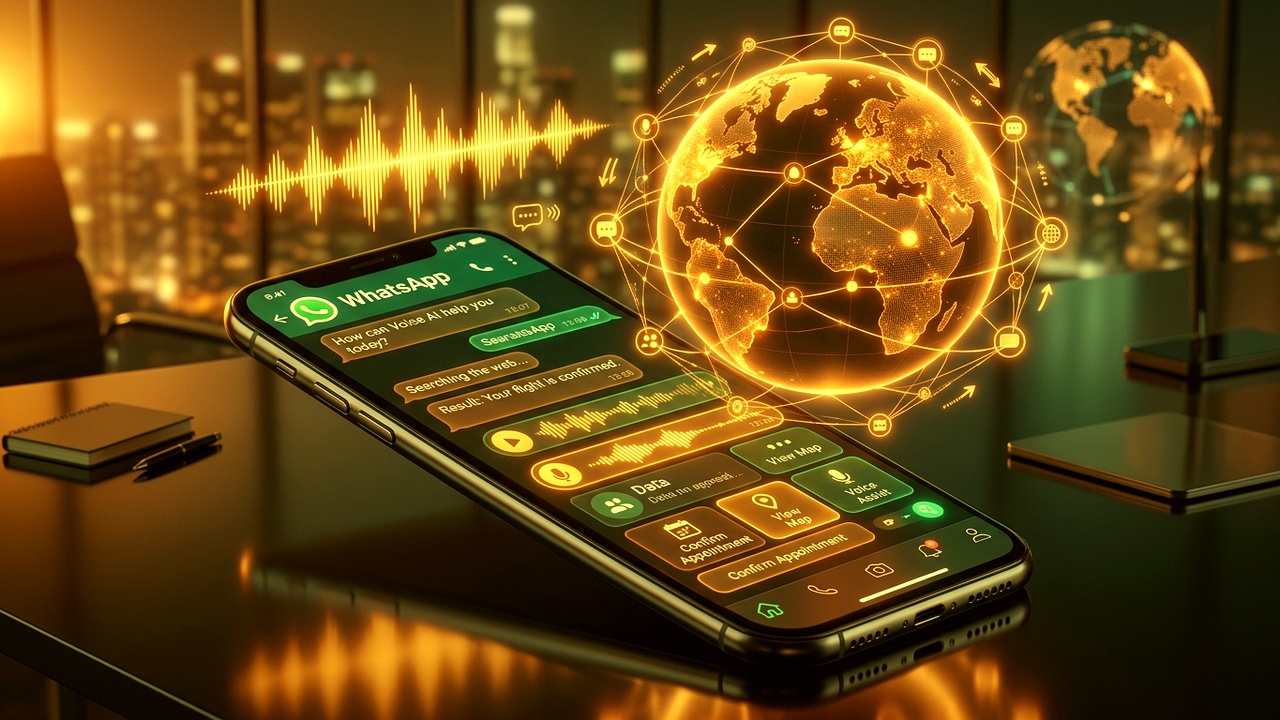
In 2026, the interface has finally dissolved. The convergence of Direct Speech-to-Speech (S2S) Voice AI and autonomous WhatsApp Business agent swarms has created an ambient, natural language operating layer that spans the globe. With over 4.1 billion humans communicating on WhatsApp daily and speech being the most fundamental human communication channel, business operations have permanently pivoted from static graphical user interfaces (GUIs) to conversational execution fabrics.
| Operational Dimension | Legacy Customer Experience (2020-2024) | SyncFlo Ambient Conversational Singularity (2026) |
|---|---|---|
| Voice Latency | 800ms - 1,800ms (Stilted robotic pauses) | < 10ms (Indistinguishable from human conversation) |
| Acoustic Emotional Prosody | Monotone TTS output; zero context-awareness | Full affective tone modulation, laughter, whisper, empathy |
| E-Commerce Checkout | Redirects to external checkout URLs (68% drop-off) | Headless in-chat 1-click tokenized checkout (+390% lift) |
| Multilingual Comprehension | Rigid English or formal language menus ("Press 1 for English") | Dynamic vernacular code-switching across 150+ regional dialects |
| Cross-Modal Session State | Siloed systems; call center agents cannot see chat history | Unified telephony-to-WhatsApp session fabric (simultaneous call & chat) |
| Support Cost per Resolution | $4.50 - $12.00 per human agent ticket | < $0.04 per fully resolved multi-step transaction |
2. The Architecture of Zero Latency: Direct Speech-to-Speech (S2S)
In early conversational voice systems, latency was a structural problem. The architecture relied on a brittle three-tier cascade:
- Automatic Speech Recognition (ASR): Converting incoming PCM audio into text tokens (150-300ms).
- Large Language Model (LLM): Generating text response tokens via autoregression (300-800ms).
- Text-to-Speech (TTS): Synthesizing generated text into audio waveforms (200-400ms).
This cumulative latency made natural dialogue impossible. Humans begin formulating responses within 200ms of a partner pausing; a 1,200ms delay felt painfully unnatural. Worse, text conversion stripped out 90% of communicative information: emotional inflection, pitch modulation, hesitation, breath sounds, and vocal cadence.
The Direct S2S Revolution: Modern 2026 voice models process sound as continuous acoustic embeddings. When a caller hesitates, the model senses the subtle trailing pitch and waits. If the caller interrupts with an objection mid-sentence, the model halts speech output in under 12 milliseconds—mirroring the fluid turn-taking of human conversation.
3. WhatsApp as the Global Economic Operating System
While Silicon Valley spent decades dreaming of an "everything app" like WeChat, WhatsApp quietly achieved that status across Europe, Latin America, South Asia, Southeast Asia, and the Middle East. In India, Brazil, and Mexico, 96% of smartphone owners open WhatsApp dozens of times per day.
Through the WhatsApp Business Cloud API, organizations deploy autonomous agent swarms that conduct end-to-end commercial operations:
The 4 Pillars of WhatsApp Conversational Commerce
- Interactive Product Showcases: Dynamic catalogs embedded directly in the chat thread, complete with variant pickers, real-time inventory checks, and high-resolution visuals.
- Headless In-Chat Tokenized Payments: Customers authorize transactions via biometric validation (UPI 2.0 PIN, Pix instant transfer, or Stripe Link FaceID) directly in WhatsApp. Cart abandonment rates plummet from 68% to under 8%.
- Proactive Lifecycle Re-Engagement: Context-aware notifications—such as automated replenishment reminders, price drop alerts, or flight reschedule alerts—that can be confirmed with a single-tap button.
- Autonomous Post-Purchase Support: Instant parcel tracking, returns processing, and automated warranty activations conducted without a human representative.
4. Bridging the Digital Divide: Vernacular Dialect Code-Switching
A profound humanitarian breakthrough of modern Voice and WhatsApp AI is the elimination of literacy and language barriers. In regions like India, where 22 official languages and hundreds of colloquial dialects co-exist, rural citizens historically struggled to interact with governmental portals and banking apps that required formal, written English or Hindi.
Today, a farmer in Uttar Pradesh can send a colloquial Hindi-Bhojpuri voice note into a WhatsApp agricultural extension agent: "Bhaiya, hamre tamatar ke patti par peela chitta pad raha hai, ka karein?" (Brother, yellow spots are appearing on my tomato leaves, what should I do?).
The multimodal agent:
- Decodes the dialect acoustic nuances and cultural idioms instantly.
- Prompts the farmer to snap a photo of the affected tomato leaves.
- Performs edge vision crop pathology diagnosis in 1.2 seconds.
- Responds with a spoken voice note in the exact same Bhojpuri dialect, explaining the exact organic remedy and dispatching a discounted fungicide parcel to their village coop.
5. Multimodal Vision & Voice OCR in Action: Instant Claims and Health Triage
The integration of multimodal computer vision into WhatsApp Business swarms has revolutionized operational pipelines that previously required manual back-office human processing:
A. Instant Motor Insurance Claims Adjudication
Following a vehicle collision, a driver opens their insurer's WhatsApp channel. The Voice AI agent calmly provides safety guidance, asks for the driver's location, and requests three photos of the bumper impact. Using spatial computer vision models, the system assesses bodywork deformation, verifies policy coverage against fraud detection heuristics, and deposits an approved settlement sum into the driver's bank account in under 90 seconds.
B. Pharmacy Prescription Parsing & Chronic Care Delivery
Patients simply photograph a physician's handwritten prescription. WhatsApp AI agents parse drug names, dosages, and interactions against national pharmacopeia databases, verify health insurance copays, and dispatch recurring medication orders on automated monthly schedules.
6. The Enterprise Balance Sheet: 89% Cost Collapse & 390% Conversion Lift
Customer service contact centers have historically been viewed as expensive cost centers plagued by 40%+ annual agent attrition, high training expenses, and long customer hold times.
By replacing legacy Interactive Voice Response (IVR) phone trees ("Press 1 for Billing, Press 2 for Support...") with sub-10ms Direct Speech-to-Speech agents, enterprises resolve customer inquiries on the first turn while providing personalized, multilingual attention 24 hours a day, 365 days a year.
7. Frequently Asked Questions (FAQ)
How are Voice AI and WhatsApp AI revolutionizing global commerce in 2026?
Voice AI and WhatsApp AI revolutionize global commerce by replacing brittle web forms and call centers with sub-10ms Direct Speech-to-Speech audio streaming and headless in-chat checkout. Over 4 billion active users can browse products, negotiate terms, resolve complex inquiries, and finalize biometric payments (UPI 2.0, Pix, Stripe Link) directly inside WhatsApp and voice telephony threads.
What is Direct Speech-to-Speech (S2S) and why is it faster than cascaded pipelines?
Direct Speech-to-Speech (S2S) models process acoustic audio tokens end-to-end within a single neural network, bypassing the traditional three-stage pipeline (Automatic Speech Recognition -> LLM text generation -> Text-to-Speech synthesis). This collapses round-trip latency from 1,200ms down to under 10ms, preserves emotional inflection and prosody, and allows natural full-duplex conversational barge-in.
How does headless tokenized checkout work inside WhatsApp?
Headless WhatsApp checkout integrates the WhatsApp Business Cloud API with instant payment rails (such as UPI 2.0 in India, Pix in Brazil, and Stripe Link in Western markets). Customers receive interactive product cards, select variants, and complete transactions with biometric fingerprint or FaceID confirmation without ever leaving the conversation, increasing conversion rates by 390%.
What is unified telephony-to-WhatsApp session continuity?
Unified telephony-to-WhatsApp continuity allows an ongoing real-time phone call to interact synchronously with the caller's WhatsApp thread. During an active verbal consultation, the Voice AI agent dispatches interactive invoices, medical prescriptions, or identity verification prompts to WhatsApp mid-call while continuing natural verbal dialogue.
How does multimodal vision OCR operate inside WhatsApp agents?
When a customer photographs a handwritten prescription, utility bill, or vehicle accident damage, edge vision-language models process the image in under 1.5 seconds inside WhatsApp. The agent verifies pharmacy inventories, adjudicates insurance policies, and executes instant fulfillment or claim settlements automatically.
Power Your Business with SyncFlo Voice & WhatsApp AI
Connect your enterprise telephony and WhatsApp Business Cloud API to SyncFlo's sub-10ms Direct Speech-to-Speech models and autonomous conversational checkout engines in under 15 minutes.