Autonomous AI Agents in 2026: The Complete Guide to Enterprise Agentic Workflows
How next-generation multi-agent orchestration is replacing brittle legacy automation, empowering sales teams, and unlocking hyper-scale operational efficiency.
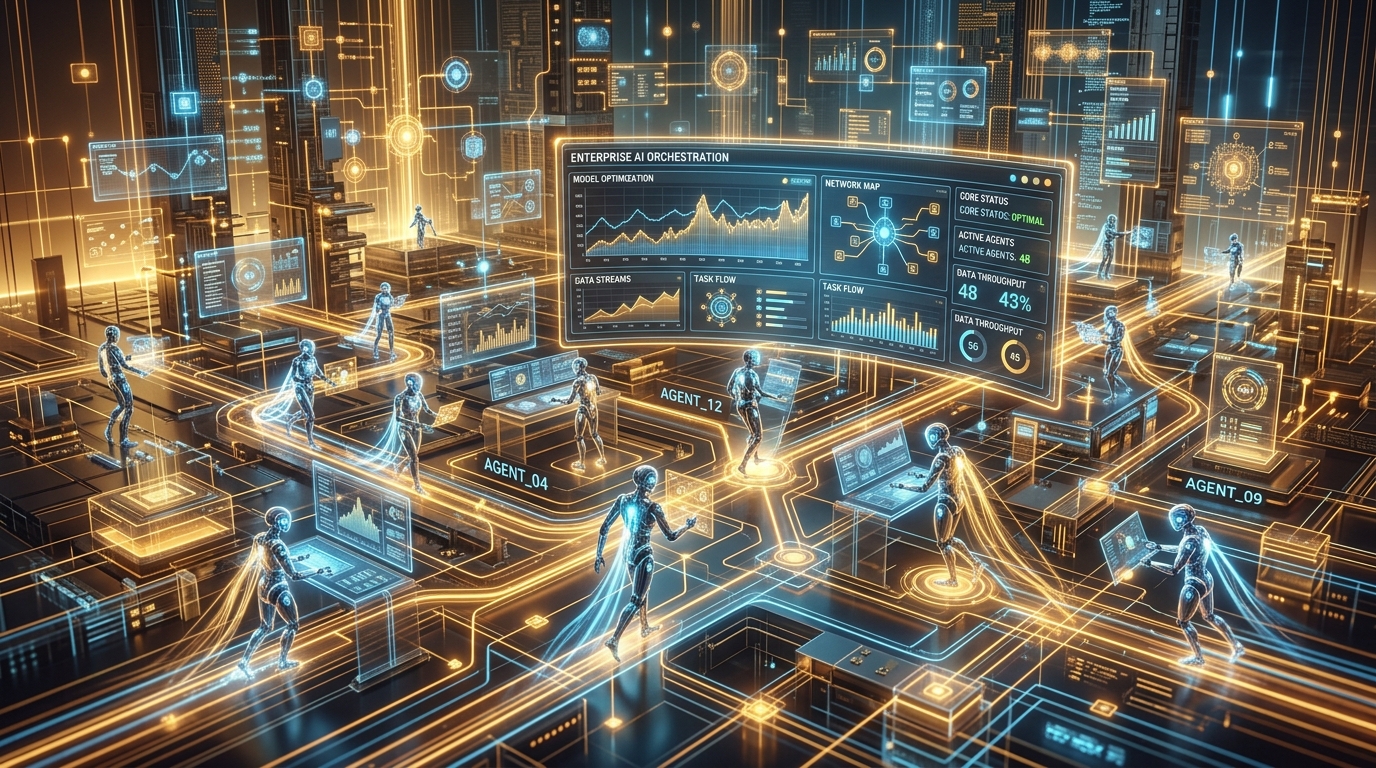
We have officially crossed the threshold from static generative responses into the era of Autonomous AI Agents. In 2026, enterprise competitive advantage is no longer determined by who has access to raw Large Language Models (LLMs), but by how effectively organizations structure agentic workflows to turn intelligent models into goal-oriented digital team members.
1. What Are Autonomous AI Agents in 2026?
An autonomous AI agent is an intelligent system that receives a high-level objective, breaks it down into actionable sub-tasks, queries external tools and databases, executes actions across third-party APIs, evaluates its own outputs, and iteratively completes complex business goals with minimal oversight.
Unlike traditional chatbots that simply answer queries, autonomous agents possess four key components:
- Reasoning & Planning: Deconstructing macro goals into step-by-step logical execution paths.
- Tool Integration (MCP & APIs): Invoking web search, CRM read/writes, database operations, and document processors seamlessly.
- Short & Long-term Memory: Retaining state, context, and historic interaction logs across long-running tasks.
- Self-Correction & Reflection: Evaluating API errors or unexpected outputs and automatically retrying with revised parameters.
"The leap from prompt engineering to agentic orchestration is the single largest productivity catalyst for enterprises since the advent of cloud computing."
2. The Strategic Shift: Linear Automation vs. Agentic Workflows
For over a decade, businesses relied on rigid Zapier-style linear automations: If Event A happens, trigger Action B. While useful, these linear chains break down whenever data formats change slightly, APIs return unexpected edge cases, or decisions require nuanced context.
| Capability | Traditional Linear Automation | SyncFlo Agentic Workflows (2026) |
|---|---|---|
| Adaptability | Rigid; fails on unexpected inputs | Dynamic reasoning & contextual routing |
| Decision Making | Hardcoded boolean conditions | LLM-powered probabilistic decisioning |
| Error Recovery | Requires manual human intervention | Autonomous self-debugging and retry loops |
| Tool Utilization | Pre-configured fixed integrations | On-demand API selection via agent tool registry |
3. Multi-Agent Orchestration Architecture
Rather than relying on a single monolith model trying to execute every task, enterprise leaders deploy specialized sub-agents working in concert under a central coordinator agent.
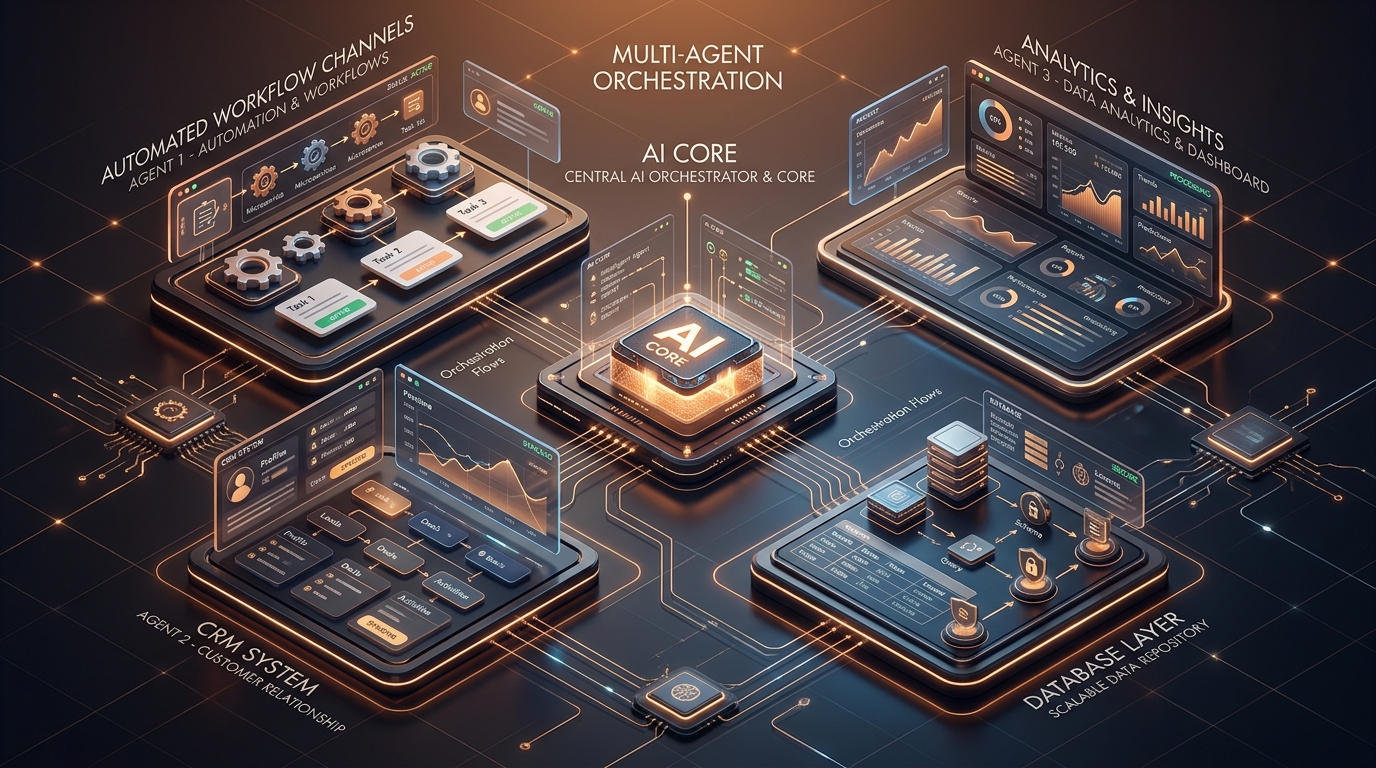
For example, in a high-value sales pipeline:
- Lead Qualification Agent: Scrapes company signals, checks domain metrics, and scores inbound prospects.
- Research Agent: Analyzes SEC filings, recent press releases, and executive profiles to draft tailored value propositions.
- Outreach Agent: Generates hyper-personalized multi-channel sequences across email and WhatsApp.
- CRM Sync Agent: Logs all activities directly into HubSpot or Salesforce with zero human effort.
4. Top Enterprise Use Cases in 2026
A. Automated Sales Pipeline Nurturing
By connecting SyncFlo AI agents with your messaging channels, reps can eliminate up to 70% of repetitive data entry. Agents handle follow-ups, answer technical product questions 24/7, and schedule demo bookings directly into rep calendars.
B. E-Commerce Customer Success & Dispute Resolution
Autonomous agents verify shipping tracking numbers, issue refunds according to custom enterprise policy bounds, and resolve customer tickets within seconds without escalating simple queries to human support desks.
C. Automated Content & SEO Lifecycle Management
Agents regularly monitor search rankings, identify falling content clusters, refresh outdated data, generate structured JSON-LD schemas, and automatically deploy changes to production content systems.
5. How SyncFlo AI Empowers Your Organization
At SyncFlo AI, we provide the underlying framework, tool bridges, and secure execution runtime required to deploy reliable, enterprise-grade AI agents. With built-in guardrails, role-based permission control, and audit logs, your team can harness agentic power without risking security compliance.
Ready to Automate Your Business Workflows?
Experience the power of SyncFlo AI's autonomous agent engine today.
Frequently Asked Questions (FAQ)
What are autonomous AI agents in 2026?
Autonomous AI agents are software entities powered by advanced large language models (LLMs) capable of reasoning, planning, executing tools, calling APIs, and completing complex multi-step goals without continuous human intervention.
How do agentic workflows differ from linear automation tools?
Traditional linear automation follows strict, hardcoded if/then rules. Agentic workflows adapt dynamically to unexpected inputs, self-correct errors, select appropriate APIs dynamically, and collaborate with other specialized agents.
How does SyncFlo AI enable enterprise multi-agent workflows?
SyncFlo AI provides a centralized orchestration engine connecting your CRMs, databases, messaging channels, and internal tools, allowing custom autonomous agents to collaborate safely and execute tasks in real-time.