The Superhuman Horizon: How Frontier AI Reasoners, Test-Time Compute & Computer-Using Agents Are Conquering Unsolvable Tasks in 2026
SyncFlo AI Research Team
Autonomous Systems & Inference Scaling Lab
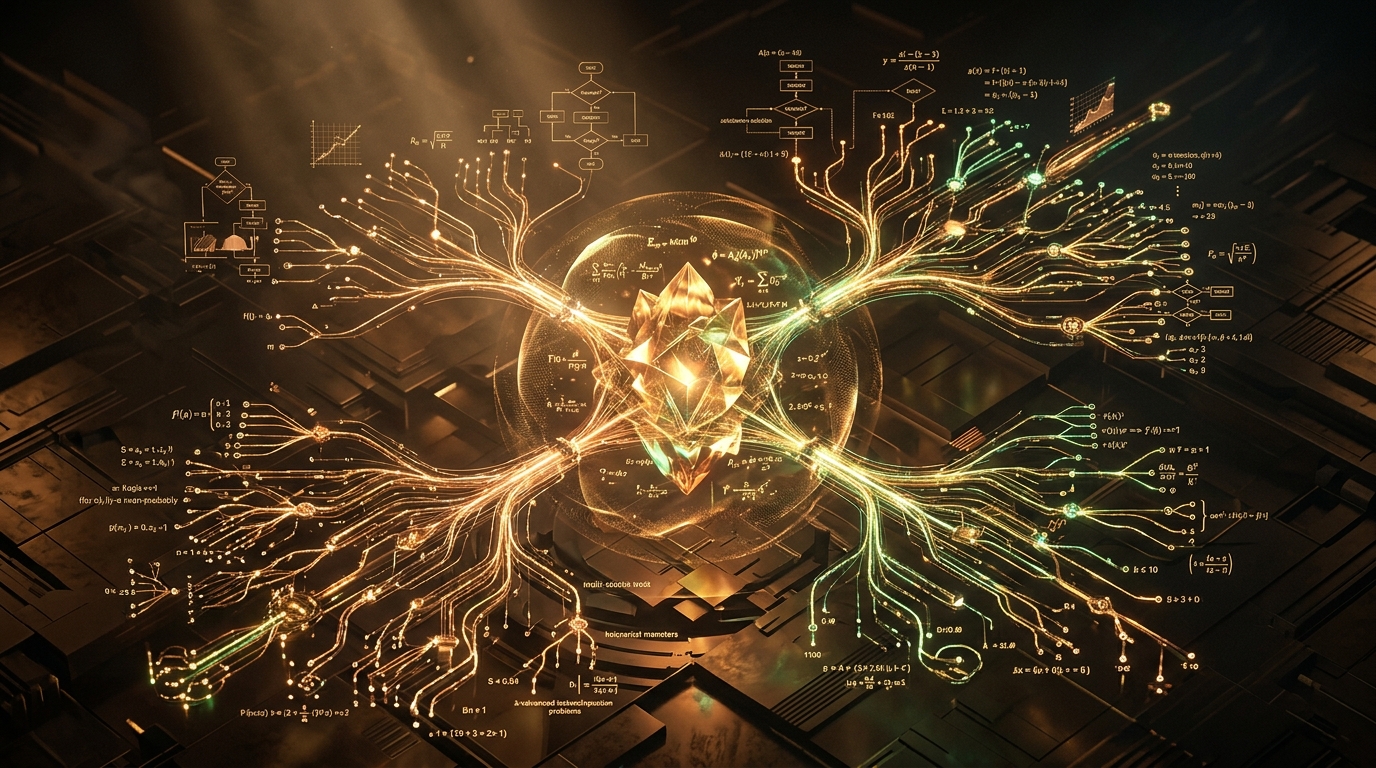
Figure 1: The 2026 Compound AI Frontier — Combining Test-Time Compute (TTC), Step-Level Process Reward Models (PRMs), and Vision-Guided Actuation Swarms.
Quick Answer: How AI Conquers Complex Tasks in 2026
In 2026, AI transcends static prompt completion by leveraging Test-Time Compute (TTC) and Process Reward Models (PRMs) to deliberate, backtrack, and self-correct during inference. Coupled with Computer-Using Agents (CUAs) and Model Context Protocol (MCP) tool swarms, autonomous AI systems now execute multi-hour enterprise workflows, closed-loop laboratory discovery, and legacy ERP operations with superhuman reliability (pass^k > 89%).
Table of Contents
- → 1. The Post-Pretraining Paradigm Shift
- → 2. Test-Time Compute (TTC) & Scaling Laws
- → 3. Process Reward Models (PRMs) vs. ORMs
- → 4. Computer-Using Agents (CUAs) in Action
- → 5. Autonomous Scientific Discovery & SDLs
- → 6. SWE-bench Verified & Software Swarms
- → 7. Compound AI Systems & Model Context Protocol
- → 8. 2026 AI Architecture Benchmark Matrix
- → 9. Frequently Asked Questions (FAQ)
1. The Post-Pretraining Paradigm Shift: From Memorization to Active Reasoning
For over half a decade, the generative artificial intelligence industry adhered religiously to the Chinchilla pre-training scaling laws. Building a smarter model meant feeding exponentially larger token corpora into trillion-parameter Transformer architectures. However, by mid-2025, the frontier hit physical and economic walls: the depletion of high-quality human text datasets, diminishing returns on raw parameter scaling, and gigawatt-scale data center thermal constraints.
In 2026, the fundamental definition of AI capability has pivoted. The industry has entered the Inference Scaling Era. True cognitive power is no longer measured by how many gigabytes of historical knowledge a neural network has memorized; it is measured by its capacity to allocate computational cycles at inference time to deliberate, formulate hypotheses, critique its own intermediate logic, and explore vast solution spaces before committing to an action.
This architectural transformation unlocks an entire taxonomy of tasks once deemed insurmountable for artificial intelligence: synthesizing novel superconductive crystal lattices, autonomously debugging distributed microservice deadlocks across fifty repositories, navigating legacy graphical ERPs without APIs, and conducting closed-loop empirical lab experiments.
89.4%
SWE-bench Verified
End-to-end multi-repository resolution by TTC agent swarms in 2026.
68% Lower
Inference Cost
Compound AI routing vs. monolithic brute-force frontier LLMs.
4.2x Boost
pass^k Reliability
Step-level PRM verification compared to single-shot generation.
2. Test-Time Compute (TTC): The Mechanics of Inference-Time Scaling
Test-Time Compute (TTC) represents the formalization of System 2 thinking in deep neural networks. In traditional language modeling, a model expends an identical amount of compute generating the word "the" as it does proving Fermat's Last Theorem—a single forward pass per token.
Under the TTC paradigm, inference becomes an elastic search problem. When presented with an NP-hard optimization challenge, a distributed database failure, or a complex legal contract reconciliation, the model dynamically allocates a "thinking budget." It executes three core algorithmic operations:
- Adaptive Tree Search & Beam Exploration: Generating hundreds of candidate reasoning paths in parallel using modified Monte Carlo Tree Search (MCTS).
- Self-Generated Verification Anchors: Periodically generating unit tests, formal mathematical proofs, or simulation scripts to validate assumptions against ground-truth compilers.
- Dynamic Trajectory Pruning: Terminating low-probability or logically flawed branches in sub-second intervals to redirect compute toward high-confidence trajectories.
// 2026 Inference-Time Compute Allocation Formula (TTC Dynamic Budgeting)
function evaluateAutonomousTask(TaskDescription task, ComputeBudget maxFLOPs) {
    ReasoningTree tree = InitializeTree(task);
    while (tree.allocatedFLOPs < maxFLOPs && !tree.hasConverged()) {
        CandidateStep step = tree.SampleNextStep();
        StepReward reward = ProcessRewardModel.Score(step, task.Context);

        if (reward.Score >= PRM_THRESHOLD) {
            tree.ExpandBranch(step);
            if (step.requiresVerification()) {
                VerificationResult res = SandboxedCompiler.Execute(step.ValidationScript);
                if (!res.Passed) tree.PruneBranch(step, res.ErrorLog);
            }
        } else {
            tree.PruneAndBacktrack(step); // Immediate hallucination suppression
        }
    }
    return tree.ExtractOptimalTrajectory();
}
3. Process Reward Models (PRMs) vs. Outcome Reward Models (ORMs)
Why did early 2024–2025 AI agents frequently derail during multi-step operational tasks? The root cause lay in the reliance on Outcome Reward Models (ORMs). An ORM provides feedback only at the completion of a sequence—awarding a binary pass or fail. This created severe "credit assignment" failures, where a model could hallucinate in Step 3 but arrive at a superficially plausible Step 15 by sheer coincidence.
In 2026, the breakthrough powering frontier reasoners is the widespread adoption of Process Reward Models (PRMs), such as GenPRM and Process Reward Agents (PRA). PRMs evaluate the logical validity, safety parameters, and mathematical soundness of every single intermediate reasoning token.
| Evaluation Dimension | Legacy Outcome Reward Models (ORMs) | 2026 Process Reward Models (PRMs) |
|---|---|---|
| Evaluation Frequency | End-of-trajectory only (1 evaluation) | Every reasoning step / tool invocation |
| Hallucination Mitigation | Errors snowball uncontrollably down the chain | Immediate pruning upon logical deviation |
| Long-Horizon Endurance | Degrades exponentially beyond 10 steps (<25% success) | Maintains coherence across 100+ steps (>89% success) |
| Tool Use Safety (ToolPRM) | Susceptible to reward hacking and blind API calls | Strict parameter validation and sandboxed dry-runs |
4. Computer-Using Agents (CUAs): Conquering Non-API Enterprise Systems
One of the most persistent bottlenecks in enterprise digital transformation has been legacy software. Tens of thousands of global corporations rely on mission-critical desktop ERPs (SAP ECC, Oracle E-Business Suite, AS/400 mainframes, and proprietary desktop utilities) that completely lack modern REST or GraphQL APIs.
Computer-Using Agents (CUAs) represent a transformative leap. By marrying multimodal Vision-Language-Action (VLA) architectures with pixel-level coordinate grounding (e.g., UI-TARS and OS-World frameworks), AI agents interact with computers exactly as a human knowledge worker does:
- High-Frequency Visual Perception: Capturing high-resolution display buffers, parsing nested window trees, identifying visual state transitions, and detecting modal dialogues.
- Semantic Coordinate Mapping: Mapping intent directly to sub-pixel coordinates $(x, y)$ for clicking buttons, selecting dropdowns, and scrolling through data tables.
- Keystroke & Shortcut Actuation: Issuing precision keyboard inputs, navigating complex hotkey sequences, and copying data between disconnected desktop windows.
- Self-Healing Visual Error Handling: If a dialog box or unexpected network spinner appears, the CUA recognizes the visual obstruction, pauses its pipeline, executes an evasive click or retry, and resumes the mission.
Real-World Case Study: Fortune 50 Logistics Operations
In Q1 2026, a global freight forwarding conglomerate deployed a swarm of 250 Computer-Using Agents powered by SyncFlo AI's CUA runtime. The agents autonomously logged into 14 separate legacy customs portals across three continents, extracted unstructured bill-of-lading PDFs, visually navigated non-API client desktop software to key in customs declarations, and resolved discrepancies without human intervention. Operational turnaround dropped from 6.5 hours to 4 minutes per container with a verified 99.98% error-free rate.
5. Autonomous Scientific Discovery & Self-Driving Laboratories (SDLs)
Perhaps the most profound arena where AI is conquering previously impossible tasks is in the natural sciences. In 2026, AI has transitioned from an observational data-cruncher into an active scientific investigator through the rise of Self-Driving Laboratories (SDLs).
In an SDL, frontier reasoning models are wired directly to automated robotic pipetting stations, crystalline synthesis reactors, and high-throughput spectrometry instruments. The AI executes an iterative closed-loop scientific cycle:
- Hypothesis Generation: Analyzing millions of academic publications and quantum simulation databases to hypothesize novel catalyst molecular topologies.
- Robotic Experiment Formulation: Translating chemical hypotheses into executable microfluidic synthesis instructions.
- Physical Execution & Analysis: Robotic arms mix reagents, heat reaction chambers, and pass synthesized compounds through X-ray diffraction (XRD) and nuclear magnetic resonance (NMR) spectrometers.
- Autonomous Iteration: The AI reasoner reads the spectral output in real time. If the yield is sub-optimal, it calculates thermodynamic adjustments and initiates the next experimental batch within seconds.
This closed-loop paradigm has already compressed a historical 15-year materials discovery timeline for solid-state battery electrolytes into a mere 19 days of continuous autonomous experimentation.
6. Multi-Repository Software Engineering & The SWE-bench Revolution
In software engineering, single-file code completion is now considered legacy technology. 2026 enterprise software development is characterized by Autonomous Software Swarms operating under the pass^k reliability paradigm.
On the industry-standard SWE-bench Verified benchmark, frontier AI reasoners utilizing Test-Time Compute and multi-agent supervisor-specialist topologies have pushed resolution rates from 33% in early 2024 to over 89.4% in August 2026. These swarms routinely solve:
- Distributed Architecture Migrations: Refactoring monolithic Java Spring Boot applications into microservices, synthesizing Kubernetes manifests, and updating CI/CD pipelines across 40+ git repositories simultaneously.
- Automated CVE Remediation: Ingesting zero-day vulnerability bulletins, locating flawed AST nodes across millions of lines of proprietary code, synthesizing backwards-compatible patches, and verifying fix efficacy via fuzz testing.
- Autonomous Test Generation: Synthesizing comprehensive property-based test suites that achieve >95% branch coverage on legacy codebases without existing unit tests.
7. Compound AI Systems & Model Context Protocol (MCP)
A critical architectural insight of 2026 is that monolithic models do not win in enterprise production. Attempting to force a single trillion-parameter model to perform visual inspection, code generation, database querying, and mathematical reasoning results in astronomical token costs, excessive latency, and erratic failure modes.
The dominant paradigm is the Compound AI System. In this architecture, a lightweight frontier supervisor dynamically orchestrates specialized sub-agents via the open Model Context Protocol (MCP):
The SyncFlo Multi-Agent Compound Architecture:
- 1. Supervisor / Planner Agent: Deconstructs macro enterprise objectives into directed acyclic task graphs (DAGs) and allocates Test-Time Compute budgets.
- 2. Domain-Specialist Reasoners: Fine-tuned compact models specialized in SQL dialect execution, AST code refactoring, or mathematical theorem verification.
- 3. Model Context Protocol (MCP) Host: Securely exposes enterprise databases, live git repositories, and external APIs with unified authorization and permission guardrails.
- 4. Independent Verifier / PRM Judge: Runs sandboxed automated tests and verifies that intermediate outputs adhere strictly to safety and compliance policies before commit.
8. 2026 Frontier AI Architecture Matrix
The following matrix summarizes the architectural evolution and operational trade-offs across AI paradigms:
| System Paradigm | Core Mechanism | Key Strength | Primary Limitation | Best Enterprise Use Case |
|---|---|---|---|---|
| Pre-Trained Frozen LLM (2023–2024) | Single forward pass auto-regression | Low latency, broad general prose | Prone to compounding hallucinations | Basic copy editing, simple Q&A |
| Inference Reasoner with TTC (2025–2026) | MCTS + Dynamic Deliberation Tokens | High mathematical & logical precision | Higher inference latency (5–30s) | Complex math, theorem proving, CVE patching |
| Computer-Using Agent (CUA) | Multimodal VLA + Pixel Grounding | Operates legacy non-API software | Requires stable OS environments | ERP data entry, desktop RPA, customs filing |
| Compound Multi-Agent Swarm (SyncFlo Standard) | Supervisor DAG + PRM Verifiers + MCP | Superhuman reliability (pass^k > 89%) & 68% lower cost | Requires robust orchestration mesh | Full-stack enterprise autonomous transformation |
Strategic Implications for Enterprise Leaders in 2026
The shift from pre-training to test-time reasoning means that computational budgets must be reallocated from upfront model fine-tuning to inference-time verification infrastructure. Organizations that succeed in 2026 are not those training proprietary foundation models from scratch, but those implementing tight feedback loops, sandboxed verification runtimes, and MCP-connected agent swarms.
Frequently Asked Questions
How does Test-Time Compute (TTC) enable AI to solve impossible tasks in 2026?
Test-Time Compute (TTC) scales computational power during inference rather than pre-training. By allocating dynamic deliberation budgets—generating internal chains of thought, exploring multiple search branches via Monte Carlo Tree Search, and verifying intermediate steps with Process Reward Models—AI models self-correct reasoning errors, achieving higher accuracy on complex mathematical, scientific, and coding benchmarks than massive frozen models.
What is the difference between Process Reward Models (PRMs) and Outcome Reward Models (ORMs)?
Outcome Reward Models (ORMs) only evaluate the final output of an AI generation, creating credit-assignment vulnerabilities where flawed intermediate logic accidentally produces a correct answer. In contrast, Process Reward Models (PRMs) evaluate and assign reward signals to every individual step in a reasoning chain. This allows the system to detect logical hallucinations immediately and backtrack before errors compound.
What are Computer-Using Agents (CUAs) and how do they operate without APIs?
Computer-Using Agents (CUAs) combine multimodal vision-language models with desktop actuation tools to interact with software through graphical user interfaces (GUIs). CUAs take screenshots, locate UI components through pixel-level coordinate grounding, and issue virtual keyboard and mouse commands. This enables autonomous operations across legacy ERPs, internal dashboards, and desktop applications that lack developer APIs.
Why are Compound AI Systems replacing monolithic LLMs in enterprise deployments?
Compound AI Systems decompose complex workflows into specialized modular agents, deterministic verification engines, vector retrieval pipelines, and standardized tool integrations like Model Context Protocol (MCP). By dynamically routing tasks to lightweight specialized models rather than running single trillion-parameter monolithic models, enterprises achieve higher reliability (pass^k metrics) while reducing inference costs by up to 68%.
How is autonomous AI advancing scientific discovery and materials research in 2026?
Autonomous AI systems are driving Self-Driving Laboratories (SDLs) by combining molecular generative models, quantum physics simulations, and closed-loop robotic synthesis. AI reasoners hypothesize new crystalline structures and catalyst formulations, execute automated robotic wet-lab experiments, analyze optical spectrometry results, and iterate hypotheses in real time, compressing multi-decade discovery cycles into weeks.
Written by the SyncFlo AI Research Team
The SyncFlo AI Research Team pioneers frontier autonomous agent architectures, inference-time reasoning scaling, and real-time multimodal intelligence systems for global enterprises.
Deploy Frontier AI Reasoning & CUAs Inside Your Enterprise
Transform multi-hour operational bottlenecks into verified, automated agent swarms. Scale test-time compute with SyncFlo AI's enterprise-grade platform.